In case anyone didn't hear over Christmas, planning permission has been granted for Ireland's first IKEA store - in Belfast
IKEA is definitely coming to Ireland.
Planning permission's been granted for the Swedish lifestyle store's first outlet, in Belfast.
It looks like Belfast has beaten Dublin to it for Ireland's first branch of IKEA, the store for style conscious homeowners.
While a planning application is still pending for an outlet in Ballymun, the British government's granted approval for a store at Holywood Exchange in County Down, on the shores of Belfast Lough.
At 29,000 square metres it'll be one of the biggest retail warehouses in the North and will lead to the creation of five hundred jobs.
Northern Secretary Peter Hain's hailed IKEA's coming as great news with construction starting next month for a grand opening next November.
Plans for a slightly smaller store at Ballymun in north Dublin have yet to receive planning consent, creating the prospect of a cross-border pilgrimage by IKEA worshippers everywhere.
Thursday, 28 December 2006

URBAN SPRAWL, ONE-OFF HOUSING AND PLANNING POLICY: PLANNING POLICY: MORE TO DO, BUT HOW?
This article by James Nix should be required reading for planning students. It was emailed to me yesterday following my oploading of detailing on the book "Chaos at the Crossroads":
Introduction
This article looks at the failure of land-use policy in Ireland. Mindful of writing about an area of legal failure, the emphasis is on legal reform (rather than the minutiae of existing planning regulations). The analysis spans four inter-related topics: first, the cost of housing sprawl; second, the cost of failing to distinguish development land from agricultural land; third, incentives for sprawl inherent in Irish tax legislation; and fourth, legal measures which would release “locked land” in existing urban centres providing for sustainable new development. It is assumed that constitutional arguments against the imposition of planning restrictions are largely redundant. The pre-eminence of the common good has been emphasised in a series of cases, culminating perhaps in In re Article 26 and Part V of the Planning and Development Bill, 1999. The analysis opens by outlining the link between urban sprawl and one-off housing and then moves to examine the broader legal and political context.
The Relationship between Urban Sprawl and One-off Housing
A four-part RTÉ series broadcast in May 2002, The Changing Face of Dublin, hinted that Ireland’s commitment to sustainable development could be measured, first and foremost, by examining its housing and land use policies. The documentary found that the footprint of Dublin is twice to three times that of some European cities with similar-sized populations. Were current trends to persist until 2010 Dublin will consume as much land as Los Angeles with only a quarter of the population (1.75m). In Paris about 23,000 people live in each square kilometre. Dublin’s urban density is estimated at 4,000 people per square km. Urban densities in Cork, Limerick, Galway and Waterford are lower again than Dublin. The construction of one-off housing in the countryside (for people working in urban areas) is the most graphic manifestation of urban sprawl. In a country with a growing proportion of low-density accommodation the prevalence of one-off housing suggests a wholesale system failure.
The legal and political context
Land-use in Ireland is largely governed by local authority development plans. But with 88 local authorities there is little or no uniformity of policy. The matter is further complicated by the fact that an identical policy can be applied by local authorities in different ways. The formulation of Strategic Planning Guidelines (SPGs) for the Greater Dublin Area saw some attempt to introduce a joint planning framework for counties Dublin, Meath, Kildare and Wicklow. Whether the SPGs were ever incorporated into law in any real sense and have anything more than an aspirational bent will be decided in a case currently before the Courts. Whatever their precise legal character, the failure of the SPGs has been highlighted by preliminary data taken from Census 2002. It indicates that growth is being experienced in precisely the places the SPGs sought to curb development.
Speaking at the Ballygowan/Young Environmentalists Awards in May 2002 the Taoiseach, Mr. Bertie Ahern T.D., stated that sustainable development was fundamental to his political vision. Two weeks before this statement Mr. Ahern appeared on RTÉ’s Leaders Debate with Mr. Michael Noonan T.D. Advocating reduced political involvement in the planning process, Mr. Noonan suggested that a High Court judge should be required to “sign off” on rezoning applications for land in counties Meath, Kildare and Wicklow. Rezoned land across these counties was “needed for housing” according to Mr. Noonan. This sentiment was immediately echoed by the Taoiseach (“yes, it’s needed for housing …”). Despite a commitment to sustainable development, the leaders of the main political parties envisaged the spread of Dublin further west. Both politicians therefore saw a “need” to rezone. In other words there exists a “soft policy” commitment to sustainable development and the theory of sustainable development has found its way into pre-scripted speeches. But in practice many leading politicians have yet to bring sustainability to bear on their day-to-day thinking.
The Costs of Housing Sprawl
The link between housing, transport and sustainability
A recent study has found that Irish parents spend longer in traffic than their European counterparts. The study also found that the most important factors in domestic happiness are the length of parents’ commuting time and working hours. The finding that Irish people spend an inordinate amount of time behind the wheel is echoed by a number of other statistics. The number of kilometres travelled by the Irish car per year is twice the EU average. The Irish figure is 30% higher than the US average and appears to be the highest in the world. In an international comparison of urban journey times (based on the delivery of a 5kg package over 5km) Dublin fared worst in Europe and was ranked second last in the world.
Sustainable development, conventionally defined, demands that a balance must be struck between the resources used by this generation and those placed in reserve for the next. In an Irish context, however, sustainable development seems to have gained a more grounded meaning. It is usually employed in support of the view that car-focused development is no longer a sound long-term model. This questioning of “car culture” comes at a time when congestion is beginning to hurt Ireland economically as well as well as socially. Congestion, by slowing down the delivery of goods and services, increases their cost.
Until the gremlin of congestion manifested itself there was little recognition of the “the human ecosystem” – the linkages in our own way of life – in Ireland. Now, it is increasingly realised that the development of areas distant from the urban core increases travel times, reduces leisure time and inter-personal contact.
A review of the debate on one-off housing in Ireland
Separated from villages and towns, one-off housing has come to describe development which is unconnected to any existing urban centre or scheme of development. Just under 40% of new housing in Ireland is one-off. However, opposition to one-off housing is focused on urban-generated dwellings, i.e. people who build in the countryside and commute to towns and cities. Michael Smith, Chairman of An Taisce, and Ian Lumley, An Taisce’s Heritage Officer, have been the most vocal opponents of such development. In an article in The Irish Times Michael Smith summarised the reasons for An Taisce’s stance on one-off housing. An Taisce’s opposition is premised on the social, economic and environmental consequences of one-off housing, not “concerns of taste”. Smith grouped four points under the heading “social”. Pointing to the fact that one-off dwellings are not easily served by public transport, it was argued that increased traffic from dispersed housing was “inevitable”. Second, reference was made to US literature which suggests that every extra ten minutes spent commuting carries with it a ten per cent reduction in social interaction. The knock-on effect, he argued, was less time spent with children and friends. Third, one-off housing created a “demographic time bomb”. Smith urged the reader to look 30 years ahead: “as people grow old, and sometimes too infirm to use cars, it is crucial that they should not be far from local services.” Fourth, Smith argued that one-off housing offered no solution to the housing crisis because it is an option confined to those “lucky enough to own sites”.
Under the heading “economic” Smith focused on the economies of scale which accompany consolidated residential development: “one-off houses are more expensive to serve with postal services, roads etc.” However, it was acknowledged that these higher costs are borne not by the developer, or the house purchaser, but by Irish society as a whole. In fact, due to the high cost of land in villages, the initial cost (i.e. combined site purchase and construction) of a one-off house is usually cheaper. An Taisce would counteract the high cost of land in villages “through provision of incentives (and compulsory purchase orders) for development in villages”. It was further argued that one-off housing is economically damaging because “housing insensitive to landscapes is beginning to undermine our tourist industry”. With regard to the environment, An Taisce noted one expert who found septic tanks to be “one of the main sources of bacteriological pollution of private wells”.
An Taisce’s analysis is broadly echoed by the EPA’s 2002 report:
Inappropriate single house dwellings in the rural countryside results in greater car usage, increased energy needs and greater use of small wastewater treatment plants such as septic tanks which have the potential to pollute groundwater.
The most vocal proponents of one-off housing have been Mr. Eamon O’Cuiv T.D., Minister for Community, Rural, and Gaeltacht Affairs, Dr. Seamus Caulfield of the Belderrig Research Centre and Jim Connolly, Chairman of Rural Resettlement Ireland.
Minister O’Cuiv articulated his stance on one-off housing in a debate with Michael Smith on the Late Late Show on 9 November 2001. The Minister’s primary argument can be described as “the house at the end of the valley point”. It posits the following: where utility lines, pipelines and post are already delivered to a house at the end of a valley, then there can be no argument against ribbon development on the road leading to that house. It must be said that this argument has an initial attractiveness to it. To some extent, however, it overlooks the fact that the “house at the end of the valley” is usually served at shoestring capacity. In other words a whole new infrastructure would be required to accommodate the addition of three or four houses on the road going into the valley.
Even where the services leading to the house at the end of the valley have untapped capacity, the previously expressed criticisms of urban-focused one-off housing are not displaced. The postal company still has to serve an additional three or four houses using a van or car. Household wastes are more expensive to collect or treat, and so on. Finally, the house at the end of the road into the valley is likely to be connected with a farming or forestry concern. It generates comparatively few traffic movements as compared with commuter-focused housing.
Dr. Seamus Caulfield takes inspiration from the Gaelic monikers for different forms of settlement. According to Dr. Caulfield, there is a direct Irish translation for street village (sráidbhaile), nucleated village (clachan) and dispersed village (baile fearann). Dr. Caulfield feels that the dispersed village offers a sound blueprint for future habitation patterns.
One linguistic difficulty with Dr. Caulfield’s analysis is that he fails to acknowledge that the Irish for townland is also “baile”. Hence, baile fearann could just as well refer to dispersed houses in a townland, or houses sprawled across a townland. Indeed sprawl is typically defined in terms of dispersed habitation patterns.
The root of Dr. Caulfield’s analysis is the view that Ireland should maintain relatively high levels of population in isolated rural areas. Dr. Caulfield has compared present-day census figures with famine-time statistics to show population decline in rural areas. Yet to regard the population spread of 1830’s Ireland as a sound blueprint for today may overlook many differences in lifestyle. Modern houses cannot be compared to the typical 19th century dwelling. Because of the strength and depth of modern foundations, land used for new housing can never be returned to agriculture. Running water was not a feature of the pre-famine house. With the advent of dishwashers and more demanding wash-cycle requirements for clothing, the “solution” advanced for waste water from one-off houses – the septic tank – has been found wanting.
For most people, whether in urban or rural Ireland, a trip to the cinema, take-away, dry cleaners, video shop, or sports-hall is a regular occurrence. There is simply no parallel with pre-famine Ireland. Do the proponents of one-off housing propose to suppress demand for delivered pizzas, high street shopping, festive events and third-level education? Is it defensible to advocate a vision of housing that leaves people isolated from the leisure and health/exercise facilities that are wound into the fabric of modern life?
When questioned on the issue of one-off housing in May 2002 Eamon O’Cuiv no longer grappled with the substance of the argument. Instead, he noted that farmers had become “used to selling sites”. Arguably, this represents a significant shift in position. The opponents of one-off housing no longer have to tackle an opposing argument, but rather the need for innovation in agricultural and the lack of viable exit strategies from farming. The analysis below – “the cost of failing to distinguish agricultural land from development land” – impacts on the re-invigoration of agricultural policy.
As awareness of the inadvisability of one-off housing increases, Rural Resettlement Ireland, chaired by Jim Connolly, has found its raison d’etre under threat. Planning applications by a number of its members have recently been turned down.
Support for rural resettlement was at its height at a time when the measurement of environmental indicators was in its infancy. Key linkages between planning and development policy had yet to be made. Of the new links traced in the 1998-2002 period, this writer would emphasise the following three. It was realised, first, that dynamic urban centres are needed in the west of Ireland to unlock its potential; second, that one-off housing across the west diffuses civic energy; and third, that dispersed housing patterns lock householders into a high-cost living cycle.
Knowing that resettlement in remote areas exacerbates regional problems rather than contributing to the solution, central government seems to have left the movement in limbo. Indeed, the way in which the rural resettlement movement has been treated by government is difficult to excuse. The Department of the Environment, having recognised the problem of one-off housing, produced no bill to re-direct growth to urban centres.
The lacunae left by the inaction of central government has seen the insertion or strengthening of “locals only” provisions in many county development plans. Essentially, councillors opt to ban one-off housing but exempt their own electorate from that ban. Rural Resettlement Ireland has a right to feel aggrieved by development plan provisions that foreclose the grant of planning permission to “non-locals”. Indeed, the favour shown to “locals” closely mirrors the type of discrimination roundly condemned by the Supreme Court in the Blasket Island case. Such provisions also have a somewhat ambiguous relationship with EU provisions designed to combat discrimination on the freedom to move and establish oneself in another member state. A more comprehensive solution – consistent across local authorities – is long overdue.
The Cost of Failing to Distinguish Development Land from Agricultural Land
Those opposed to one-off housing tend to focus on its economic implications for its occupants and the long-term burden on the exchequer. But, placed in a national context, there are undoubtedly broader economic issues at stake. What, for example, is the impact of sustained site sales on Irish agricultural production? Below, seven advertisements intended to cultivate interest in agricultural land are extracted:
Ballybrophy, Co. Laois
48 Acre Non-Residential Farm situated in the heart of the midlands … located within easy reach of the proposed M7 by-pass.
Ballycarney, Ferns, Co. Wexford
Sale of outstanding c.93 Acre Residential Holding with extensive Road Frontage onto a number of different roads.
Ballycumber, Co. Offaly
C. 32 Acres … just outside the 30 mile speed and is in one division and has building potential.
Clooneyquinn, Co. Roscommon
C. 7 acres – adjoins the main Elphin/Tulsk road near Clooneyquinn … also adjoins a bye road … good site potential.
Mountrath, Co. Laois
42.5 acres - Situated on the main Dublin/Limerick road, 5 miles from Mountrath, 13 miles from Portloaise and 10 miles from Roscrea.
Killare, Co. Westmeath
C. 109 acres – 13 miles from Mullingar on the main Athlone Road, 1 mile [from] Killare, good road frontage.
Killorglin, Co. Kerry
C. 100 acres plus commonage. The property contains a cottage and outoffices and has extensive road frontage.
This is a sample, not a comprehensive survey, of the way modern agricultural land is sold. Yet, even with a small sample, it is obvious that access to the primary road network and road frontage are primary concerns of vendors of agricultural land. But these characteristics are not relevant to farming. Dairies send milk transporters to collect produce from suppliers. Tillage crops are delivered once or twice a year. In livestock farming the long-distance transport of animals takes place infrequently. Weighted against soil quality or field attributes proximity to a national road is a miniscule factor. Road frontage is even less relevant to agri-business. It goes exclusively to “site potential”.
Because non-agricultural selling points have acquired an undue prominence, farmers are bidding against those willing to pay a considerable amount of “hope value” for development. This high level of hope value is directly attributable to Ireland’s malleable planning regime. As the planning regime continues to place a financial penalty on farmers who acquire land, Irish agricultural commodities will increasingly reflect the inflated cost of land. The transfer of agricultural property on the premise that virtually everywhere has “development potential” is a recipe for the frustration and stagnation of Irish agriculture. But how fair is it to attribute the upward pressure on the price of land to the surburbanistion of rural Ireland? Could land prices be increasing for other reasons?
Between 1997 and 2002 the price of Irish agricultural land rose by 142%. Can the increase in the price of land be justified by a drop in input costs? In a word, no. This author was unable to find any input cost which showed a reduction in the 1997-2002 period. The price of agricultural commodities on the other hand has typically remained static once inflation is factored into the equation. For those commodities that do show an increase the level is too slight to make a difference beyond the margins.
If the outlook for young farmers is depressing, the negative impact on the national finances must also be considered. As the increased cost of land feeds into agricultural commodities the contribution of agriculture to GNP will come under strain. Agricultural remains the third largest unsegregated employment category in GNP terms, behind pharmaceuticals and computers respectively.
The sale of sites is sometimes presented as having benign effects on farming. In reality, nothing could be further from the truth: site sales will shackle Irish agriculture over the medium and long term. Allied to this failure to consider agri-economics is a somewhat cavalier relationship between taxation and sustainable housing patterns.
Taxation Measures that Act to Encourage One-off Housing
Disposal of a site to a child – section 603A of the 1997 Act
Section 93 of the Finance Act, 2001 introduced a new relief for capital gains tax with the insertion of section 603A into the Taxes Consolidation Act, 1997. Section 603A exempts a parent from capital gains where s/he transfers a site to a child which is valued at not more that €254,000. If the child subsequently disposes of the land – other than to his/her spouse – and the land does not contain a dwelling house which has been occupied by the child for a period of 3 years, then the taxable gain which would have arisen to the parent arises to the child. Where a child falls under this claw-back provision – and pays the relevant capital gains tax – then a second transfer of a site can be made under section 603A.
It was arguably the intention of the drafters that a section 603A transfer could be made on just one occasion (by either or both parents) save where a claw-back occurs. If this is the case then it is a lacuna that allows both parents to transfer sites simultaneously to one child, i.e. a child can receive €508,000 worth of property without his/her parents incurring capital gains tax. The loophole has been noted by Appleby and Carr: “the wording of section 603A does not appear to prevent relief applying where there is a simultaneous disposal by two parents to a child.”
Section 603A is problematic in other respects. “Site” is not defined so there is no ground area restriction to limit how much land may be transferred. Given the tax-efficiency of section 603A, parents may increase the amount of land transferred to the (unrealised) limit of €508,000. In this way, section 603A allows sons and daughters to sell on further sites (albeit incurring capital gains tax in the normal way) and proliferate one-off housing on a scale that the drafters of section 603A could not have anticipated.
Usually tax legislation has a principled focus. For example, the provisions which facilitate the transfer of a private company or farm to a “favoured niece or nephew” serve to maintain and reward existing employees. But section 603A has no such focus. It seems posited on the view that just because a parent happens to have land they should be able to transfer some or all of that property to their children free from tax. This is hardly a sound basis for granting tax relief.
Instead of minimising the financial burden on the individual and the exchequer, section 603A gives a financial incentive to a person to increase their living costs. In practice these costs are borne by all of society through the payment of utility bills, taxes, service charges and so on. The continued existence of the provision suggests that, in spite of all the policy pledges, the State has yet to find an inter-departmental understanding of sustainability.
Disposal of farm lands on retirement – section 598 of the 1997 Act
Under section 598 of the Taxes Consolidation Act, 1997, as amended, “where an individual who has attained the age of 55 years disposes of the whole or part of his or her [farm]” and
the amount or value of the consideration for the disposal does not exceed €426,250, relief shall be given in respect of the full amount of capital gains tax chargeable on any gain accruing on the disposal.
The above provision only applies where the land has been farmed for the previous 10 years by the disposing party. Beyond this restriction however, section 598 is poorly attuned to the ambition of maintaining agricultural land within the agricultural land market. First, there is little justification for farmers paying no tax whatsoever on transfers of almost half a million euro. It is only reasonable, given low agricultural incomes, that the income tax take across the sector is moderate. But the same logic does not apply to the sale of core assets to non-industry buyers. That retiring farmers pay no tax on land sales of up to €475,250 comes as a surprise to many farmers.
Because the distinction between development land and agricultural land does not actually work in Ireland, there is little merit in trying to incorporate the concept into a revamped section 598. Instead, the use of covenants might be examined. Here, the vendor’s tax bill would be calculated on the basis of the length of the covenant he or she has secured to maintain the land under agricultural use. To leave the current regime unchanged is to allow the unfocused nature of section 598 to negate a plethora of policy pledges to release agricultural land to young farmers.
By going out into the countryside to build new homes and business parks, developers are taking what is for them the easiest option. But if Ireland is to seek to preserve some distinction between urban and rural then development within existing urban footprints must be stimulated and facilitated. To date the only means to foster urban regeneration has been the use of an Integrated Area Plan (IAP). While welcome, the IAP can never have more than a localised impact: it fails to provide a broad based vehicle to buttress redevelopment in urban centres.
Measures to Release Locked Land in Existing Urban Centres
The choice between taxing breaks and zoning
Perhaps the simplest way to foster urban consolidation would be to alter capital taxes to favour land in (and directly adjacent to) cities and towns. However, a number of difficulties would arise. First, if the measure was successful then the net result would reduce exchequer returns. In the current fiscal climate this scheme may not lend itself to acceptance. Second, the issue of having a number of different tax tiers would arise. Arguably, a strong case could be made for having a lower capital tax rate in an urban centre with a third-level institution. However, attaching different tax bands to urban centres (largely on the basis of population size) might prove controversial.
The alternative is to zone all rural areas free from one-off housing. This places the emphasis back on urban areas – i.e. how far should they extend? A radius of development would need to be drawn for every large urban centre. For villages a standard cut-off point might apply – 500m from the defined village centre for example. An Taisce argue for the development of villages “even where population falls below the 1,500 threshold envisaged in the Planning and Development Act, 2000”. It is not difficult to concur that a 1,500 population threshold is too demanding a requirement. And yet, for the same reasons against one-off housing, the definition of a village must contemplate some critical mass. Arguably, a primary school should be a mandatory requirement, complemented perhaps by four facilities from a list of eight: a shop, resident GP, place of worship, pub, civic centre, sports centre, long-established sports club.
Any introduction of a definition for “village” together with the limitation on one-off housing would need to be tempered by making exception for houses in the countryside used to exploit rural resources. However, it makes sense to tie this exemption to expected earnings. Otherwise, the spirit of the exemption may be contravened by attempts to build one-off houses on “hobby farms”. The introduction of a “variable rates regime” may help prevent injustice while balancing the needs of part-time and full-time farming. The “variable rates regime” would require an applicant for a one-off house to present a business plan to the planning authority showing expected earnings from land-based activity. Where the amount from land-based activity exceeds 40% of the average industrial wage (for a single person) then no rates are payable. If projected land-based income falls between 40 and 20% then the applicant would be liable for half rates. Where income from land-based activity falls between 20 and 10%, the maximum rate would apply. Below 10% the development would not qualify as land-based activity, and consequently, the applicant would be refused planning permission.
The above analysis suggests that the best approach involves a combination of zoning, rate-charging and tax reform. Such an approach might be complemented by a number of new policy initiatives, outlined below.
New Policy Initiatives
Greenfield loading
Under section 48 of the Planning and Development Act, 2000, a planning authority is empowered to demand a financial contribution from a planning applicant to improve infrastructure. In order to focus developers’ interest on the existing urban footprint, local authorities could increase the level of contributions for greenfield sites significantly above the actual cost of servicing the development. The infrastructural levy would be reduced for re-development projects (e.g. the replacement of one-storey houses with five-storey townhouses). This policy position would remain intact even where the authority was faced with high infrastructural costs for a re-developed site. In other words the contribution is no longer linked to the real cost of new infrastructure. Such a policy is dictated by the knowledge that high quality development proximate to the urban centre will reduce the local authority’s total costs over the long term. To be effective “greenfield loading” would have to be evenly applied by all planning authorities.
Laying out new streets
At present towns are developing outwards along arterial routes (on each side of the Tulla, Kilrush, and Galway roads taking Ennis as an example). As development stretches further and further away from the urban centre car dependence increases. The alternative is to fill out a grid road pattern from the centre of the town outwards. This strategy can unlock lands close to town centres (within walking distance of the train station in the example of Ennis). Importantly, the creation of new streetscapes has the potential to be self-financing. Each project will require one or more working sites (for the storage of equipment, dumping of aggregates, etc.). Because these working sites will be adjacent to a new street this land can later be sold and the proceeds used to finance the cost of the new streetscape. Grid-shaped formation is advised as it has been shown to be the most efficient road layout.
Rail-served towns
The above argument works best in towns with railway infrastructure. Residents living close to a station are more likely to take the train for inter-regional journeys. A caveat, however, must be entered with regard to rail-served towns: in creating new streetscapes the road building authority should act in reliance on projected new employment within the town itself. Long-distance daily rail commuting (e.g. Templemore to Dublin, Gorey to Dublin, etc.) may need to be analysed afresh. The effective provision of long distance commuter services (sometimes by default) occurred at a time when the concept of satellite towns remained current. However, in other countries, the promotion of satellite towns has been quietly shelved in favour of the “network city” – an area where work, accommodation and recreation are sometimes interspersed, but always linked, with each other.
This analysis suggests that “outer Dublin” should receive no support from public transport authorities or central government. Instead, the consolidation of existing “edge cities” is the optimum choice from a public transport perspective. Edge cities complemented by clusters of higher density developments will become stronger endpoints for present day bus services. (Edge cities include Swords, Blanchardstown, Clondalkin, Tallaght/Citywest, Sandyford, Bray/Greystones in Dublin; Rochestown and Mahon in Cork; Dooradoyle/Raheen and UL in Limerick.) Without a strong endpoint the extension or expansion of rail services in the future cannot be justified.
Road serving rail
The current major road-building initiative in Ireland aims to build a five-branch radial motorway network converging on an already bottlenecked M50. The project is currently on hold for financial reasons. It is difficult to reconcile the ambition to have fewer cars driving into Dublin with the ambition to build five motorways converging on Dublin. Research suggests that passengers who use rail between urban centres are more likely to use public transport at the point of arrival (e.g. Dundalk to Connolly Station followed by Connolly Station to Grand Canal Dock). The other side of this coin is that increased car use between cities inevitably leads to greater car use in cities.
It is also somewhat difficult to reconcile an ambition to have five motorways connected by the M50 with the ambition to site new industry in areas other than the M50 belt. Arguably, road design expertise might be better devoted to releasing locked land in urban centres. As noted above this strategy has financial as well as environmental attractions.
Conclusion
Housing and the servicing of housing is sometimes presented as a chicken and egg situation. It is not. The cycle of poorly served housing can only be broken by the more intensive use of land within urban centres. An attachment to famine-based housing patterns is understandable. However, after one hundred and fifty years of changing lifestyle patterns, famine-oriented housing patterns are now a recipe for poor air quality, time poverty, and high living costs. More generally, it is vital to move away from policies of rural development that have the net effect of compromising the price-competitiveness of Irish agriculture. Beyond agriculture policy, elements of tax legislation are badly in need of reform. A more purposive nationally-based planning regime offers a good primary structure to attract development to urban centres. Finally, it is necessary to align infrastructural spending with a long-term vision of land use and transport. There is little point in employing the language of sustainability if the net result of governmental action is to clog roads with urban-focused development that is ever more distant from its target centre.
Introduction
This article looks at the failure of land-use policy in Ireland. Mindful of writing about an area of legal failure, the emphasis is on legal reform (rather than the minutiae of existing planning regulations). The analysis spans four inter-related topics: first, the cost of housing sprawl; second, the cost of failing to distinguish development land from agricultural land; third, incentives for sprawl inherent in Irish tax legislation; and fourth, legal measures which would release “locked land” in existing urban centres providing for sustainable new development. It is assumed that constitutional arguments against the imposition of planning restrictions are largely redundant. The pre-eminence of the common good has been emphasised in a series of cases, culminating perhaps in In re Article 26 and Part V of the Planning and Development Bill, 1999. The analysis opens by outlining the link between urban sprawl and one-off housing and then moves to examine the broader legal and political context.
The Relationship between Urban Sprawl and One-off Housing
A four-part RTÉ series broadcast in May 2002, The Changing Face of Dublin, hinted that Ireland’s commitment to sustainable development could be measured, first and foremost, by examining its housing and land use policies. The documentary found that the footprint of Dublin is twice to three times that of some European cities with similar-sized populations. Were current trends to persist until 2010 Dublin will consume as much land as Los Angeles with only a quarter of the population (1.75m). In Paris about 23,000 people live in each square kilometre. Dublin’s urban density is estimated at 4,000 people per square km. Urban densities in Cork, Limerick, Galway and Waterford are lower again than Dublin. The construction of one-off housing in the countryside (for people working in urban areas) is the most graphic manifestation of urban sprawl. In a country with a growing proportion of low-density accommodation the prevalence of one-off housing suggests a wholesale system failure.
The legal and political context
Land-use in Ireland is largely governed by local authority development plans. But with 88 local authorities there is little or no uniformity of policy. The matter is further complicated by the fact that an identical policy can be applied by local authorities in different ways. The formulation of Strategic Planning Guidelines (SPGs) for the Greater Dublin Area saw some attempt to introduce a joint planning framework for counties Dublin, Meath, Kildare and Wicklow. Whether the SPGs were ever incorporated into law in any real sense and have anything more than an aspirational bent will be decided in a case currently before the Courts. Whatever their precise legal character, the failure of the SPGs has been highlighted by preliminary data taken from Census 2002. It indicates that growth is being experienced in precisely the places the SPGs sought to curb development.
Speaking at the Ballygowan/Young Environmentalists Awards in May 2002 the Taoiseach, Mr. Bertie Ahern T.D., stated that sustainable development was fundamental to his political vision. Two weeks before this statement Mr. Ahern appeared on RTÉ’s Leaders Debate with Mr. Michael Noonan T.D. Advocating reduced political involvement in the planning process, Mr. Noonan suggested that a High Court judge should be required to “sign off” on rezoning applications for land in counties Meath, Kildare and Wicklow. Rezoned land across these counties was “needed for housing” according to Mr. Noonan. This sentiment was immediately echoed by the Taoiseach (“yes, it’s needed for housing …”). Despite a commitment to sustainable development, the leaders of the main political parties envisaged the spread of Dublin further west. Both politicians therefore saw a “need” to rezone. In other words there exists a “soft policy” commitment to sustainable development and the theory of sustainable development has found its way into pre-scripted speeches. But in practice many leading politicians have yet to bring sustainability to bear on their day-to-day thinking.
The Costs of Housing Sprawl
The link between housing, transport and sustainability
A recent study has found that Irish parents spend longer in traffic than their European counterparts. The study also found that the most important factors in domestic happiness are the length of parents’ commuting time and working hours. The finding that Irish people spend an inordinate amount of time behind the wheel is echoed by a number of other statistics. The number of kilometres travelled by the Irish car per year is twice the EU average. The Irish figure is 30% higher than the US average and appears to be the highest in the world. In an international comparison of urban journey times (based on the delivery of a 5kg package over 5km) Dublin fared worst in Europe and was ranked second last in the world.
Sustainable development, conventionally defined, demands that a balance must be struck between the resources used by this generation and those placed in reserve for the next. In an Irish context, however, sustainable development seems to have gained a more grounded meaning. It is usually employed in support of the view that car-focused development is no longer a sound long-term model. This questioning of “car culture” comes at a time when congestion is beginning to hurt Ireland economically as well as well as socially. Congestion, by slowing down the delivery of goods and services, increases their cost.
Until the gremlin of congestion manifested itself there was little recognition of the “the human ecosystem” – the linkages in our own way of life – in Ireland. Now, it is increasingly realised that the development of areas distant from the urban core increases travel times, reduces leisure time and inter-personal contact.
A review of the debate on one-off housing in Ireland
Separated from villages and towns, one-off housing has come to describe development which is unconnected to any existing urban centre or scheme of development. Just under 40% of new housing in Ireland is one-off. However, opposition to one-off housing is focused on urban-generated dwellings, i.e. people who build in the countryside and commute to towns and cities. Michael Smith, Chairman of An Taisce, and Ian Lumley, An Taisce’s Heritage Officer, have been the most vocal opponents of such development. In an article in The Irish Times Michael Smith summarised the reasons for An Taisce’s stance on one-off housing. An Taisce’s opposition is premised on the social, economic and environmental consequences of one-off housing, not “concerns of taste”. Smith grouped four points under the heading “social”. Pointing to the fact that one-off dwellings are not easily served by public transport, it was argued that increased traffic from dispersed housing was “inevitable”. Second, reference was made to US literature which suggests that every extra ten minutes spent commuting carries with it a ten per cent reduction in social interaction. The knock-on effect, he argued, was less time spent with children and friends. Third, one-off housing created a “demographic time bomb”. Smith urged the reader to look 30 years ahead: “as people grow old, and sometimes too infirm to use cars, it is crucial that they should not be far from local services.” Fourth, Smith argued that one-off housing offered no solution to the housing crisis because it is an option confined to those “lucky enough to own sites”.
Under the heading “economic” Smith focused on the economies of scale which accompany consolidated residential development: “one-off houses are more expensive to serve with postal services, roads etc.” However, it was acknowledged that these higher costs are borne not by the developer, or the house purchaser, but by Irish society as a whole. In fact, due to the high cost of land in villages, the initial cost (i.e. combined site purchase and construction) of a one-off house is usually cheaper. An Taisce would counteract the high cost of land in villages “through provision of incentives (and compulsory purchase orders) for development in villages”. It was further argued that one-off housing is economically damaging because “housing insensitive to landscapes is beginning to undermine our tourist industry”. With regard to the environment, An Taisce noted one expert who found septic tanks to be “one of the main sources of bacteriological pollution of private wells”.
An Taisce’s analysis is broadly echoed by the EPA’s 2002 report:
Inappropriate single house dwellings in the rural countryside results in greater car usage, increased energy needs and greater use of small wastewater treatment plants such as septic tanks which have the potential to pollute groundwater.
The most vocal proponents of one-off housing have been Mr. Eamon O’Cuiv T.D., Minister for Community, Rural, and Gaeltacht Affairs, Dr. Seamus Caulfield of the Belderrig Research Centre and Jim Connolly, Chairman of Rural Resettlement Ireland.
Minister O’Cuiv articulated his stance on one-off housing in a debate with Michael Smith on the Late Late Show on 9 November 2001. The Minister’s primary argument can be described as “the house at the end of the valley point”. It posits the following: where utility lines, pipelines and post are already delivered to a house at the end of a valley, then there can be no argument against ribbon development on the road leading to that house. It must be said that this argument has an initial attractiveness to it. To some extent, however, it overlooks the fact that the “house at the end of the valley” is usually served at shoestring capacity. In other words a whole new infrastructure would be required to accommodate the addition of three or four houses on the road going into the valley.
Even where the services leading to the house at the end of the valley have untapped capacity, the previously expressed criticisms of urban-focused one-off housing are not displaced. The postal company still has to serve an additional three or four houses using a van or car. Household wastes are more expensive to collect or treat, and so on. Finally, the house at the end of the road into the valley is likely to be connected with a farming or forestry concern. It generates comparatively few traffic movements as compared with commuter-focused housing.
Dr. Seamus Caulfield takes inspiration from the Gaelic monikers for different forms of settlement. According to Dr. Caulfield, there is a direct Irish translation for street village (sráidbhaile), nucleated village (clachan) and dispersed village (baile fearann). Dr. Caulfield feels that the dispersed village offers a sound blueprint for future habitation patterns.
One linguistic difficulty with Dr. Caulfield’s analysis is that he fails to acknowledge that the Irish for townland is also “baile”. Hence, baile fearann could just as well refer to dispersed houses in a townland, or houses sprawled across a townland. Indeed sprawl is typically defined in terms of dispersed habitation patterns.
The root of Dr. Caulfield’s analysis is the view that Ireland should maintain relatively high levels of population in isolated rural areas. Dr. Caulfield has compared present-day census figures with famine-time statistics to show population decline in rural areas. Yet to regard the population spread of 1830’s Ireland as a sound blueprint for today may overlook many differences in lifestyle. Modern houses cannot be compared to the typical 19th century dwelling. Because of the strength and depth of modern foundations, land used for new housing can never be returned to agriculture. Running water was not a feature of the pre-famine house. With the advent of dishwashers and more demanding wash-cycle requirements for clothing, the “solution” advanced for waste water from one-off houses – the septic tank – has been found wanting.
For most people, whether in urban or rural Ireland, a trip to the cinema, take-away, dry cleaners, video shop, or sports-hall is a regular occurrence. There is simply no parallel with pre-famine Ireland. Do the proponents of one-off housing propose to suppress demand for delivered pizzas, high street shopping, festive events and third-level education? Is it defensible to advocate a vision of housing that leaves people isolated from the leisure and health/exercise facilities that are wound into the fabric of modern life?
When questioned on the issue of one-off housing in May 2002 Eamon O’Cuiv no longer grappled with the substance of the argument. Instead, he noted that farmers had become “used to selling sites”. Arguably, this represents a significant shift in position. The opponents of one-off housing no longer have to tackle an opposing argument, but rather the need for innovation in agricultural and the lack of viable exit strategies from farming. The analysis below – “the cost of failing to distinguish agricultural land from development land” – impacts on the re-invigoration of agricultural policy.
As awareness of the inadvisability of one-off housing increases, Rural Resettlement Ireland, chaired by Jim Connolly, has found its raison d’etre under threat. Planning applications by a number of its members have recently been turned down.
Support for rural resettlement was at its height at a time when the measurement of environmental indicators was in its infancy. Key linkages between planning and development policy had yet to be made. Of the new links traced in the 1998-2002 period, this writer would emphasise the following three. It was realised, first, that dynamic urban centres are needed in the west of Ireland to unlock its potential; second, that one-off housing across the west diffuses civic energy; and third, that dispersed housing patterns lock householders into a high-cost living cycle.
Knowing that resettlement in remote areas exacerbates regional problems rather than contributing to the solution, central government seems to have left the movement in limbo. Indeed, the way in which the rural resettlement movement has been treated by government is difficult to excuse. The Department of the Environment, having recognised the problem of one-off housing, produced no bill to re-direct growth to urban centres.
The lacunae left by the inaction of central government has seen the insertion or strengthening of “locals only” provisions in many county development plans. Essentially, councillors opt to ban one-off housing but exempt their own electorate from that ban. Rural Resettlement Ireland has a right to feel aggrieved by development plan provisions that foreclose the grant of planning permission to “non-locals”. Indeed, the favour shown to “locals” closely mirrors the type of discrimination roundly condemned by the Supreme Court in the Blasket Island case. Such provisions also have a somewhat ambiguous relationship with EU provisions designed to combat discrimination on the freedom to move and establish oneself in another member state. A more comprehensive solution – consistent across local authorities – is long overdue.
The Cost of Failing to Distinguish Development Land from Agricultural Land
Those opposed to one-off housing tend to focus on its economic implications for its occupants and the long-term burden on the exchequer. But, placed in a national context, there are undoubtedly broader economic issues at stake. What, for example, is the impact of sustained site sales on Irish agricultural production? Below, seven advertisements intended to cultivate interest in agricultural land are extracted:
Ballybrophy, Co. Laois
48 Acre Non-Residential Farm situated in the heart of the midlands … located within easy reach of the proposed M7 by-pass.
Ballycarney, Ferns, Co. Wexford
Sale of outstanding c.93 Acre Residential Holding with extensive Road Frontage onto a number of different roads.
Ballycumber, Co. Offaly
C. 32 Acres … just outside the 30 mile speed and is in one division and has building potential.
Clooneyquinn, Co. Roscommon
C. 7 acres – adjoins the main Elphin/Tulsk road near Clooneyquinn … also adjoins a bye road … good site potential.
Mountrath, Co. Laois
42.5 acres - Situated on the main Dublin/Limerick road, 5 miles from Mountrath, 13 miles from Portloaise and 10 miles from Roscrea.
Killare, Co. Westmeath
C. 109 acres – 13 miles from Mullingar on the main Athlone Road, 1 mile [from] Killare, good road frontage.
Killorglin, Co. Kerry
C. 100 acres plus commonage. The property contains a cottage and outoffices and has extensive road frontage.
This is a sample, not a comprehensive survey, of the way modern agricultural land is sold. Yet, even with a small sample, it is obvious that access to the primary road network and road frontage are primary concerns of vendors of agricultural land. But these characteristics are not relevant to farming. Dairies send milk transporters to collect produce from suppliers. Tillage crops are delivered once or twice a year. In livestock farming the long-distance transport of animals takes place infrequently. Weighted against soil quality or field attributes proximity to a national road is a miniscule factor. Road frontage is even less relevant to agri-business. It goes exclusively to “site potential”.
Because non-agricultural selling points have acquired an undue prominence, farmers are bidding against those willing to pay a considerable amount of “hope value” for development. This high level of hope value is directly attributable to Ireland’s malleable planning regime. As the planning regime continues to place a financial penalty on farmers who acquire land, Irish agricultural commodities will increasingly reflect the inflated cost of land. The transfer of agricultural property on the premise that virtually everywhere has “development potential” is a recipe for the frustration and stagnation of Irish agriculture. But how fair is it to attribute the upward pressure on the price of land to the surburbanistion of rural Ireland? Could land prices be increasing for other reasons?
Between 1997 and 2002 the price of Irish agricultural land rose by 142%. Can the increase in the price of land be justified by a drop in input costs? In a word, no. This author was unable to find any input cost which showed a reduction in the 1997-2002 period. The price of agricultural commodities on the other hand has typically remained static once inflation is factored into the equation. For those commodities that do show an increase the level is too slight to make a difference beyond the margins.
If the outlook for young farmers is depressing, the negative impact on the national finances must also be considered. As the increased cost of land feeds into agricultural commodities the contribution of agriculture to GNP will come under strain. Agricultural remains the third largest unsegregated employment category in GNP terms, behind pharmaceuticals and computers respectively.
The sale of sites is sometimes presented as having benign effects on farming. In reality, nothing could be further from the truth: site sales will shackle Irish agriculture over the medium and long term. Allied to this failure to consider agri-economics is a somewhat cavalier relationship between taxation and sustainable housing patterns.
Taxation Measures that Act to Encourage One-off Housing
Disposal of a site to a child – section 603A of the 1997 Act
Section 93 of the Finance Act, 2001 introduced a new relief for capital gains tax with the insertion of section 603A into the Taxes Consolidation Act, 1997. Section 603A exempts a parent from capital gains where s/he transfers a site to a child which is valued at not more that €254,000. If the child subsequently disposes of the land – other than to his/her spouse – and the land does not contain a dwelling house which has been occupied by the child for a period of 3 years, then the taxable gain which would have arisen to the parent arises to the child. Where a child falls under this claw-back provision – and pays the relevant capital gains tax – then a second transfer of a site can be made under section 603A.
It was arguably the intention of the drafters that a section 603A transfer could be made on just one occasion (by either or both parents) save where a claw-back occurs. If this is the case then it is a lacuna that allows both parents to transfer sites simultaneously to one child, i.e. a child can receive €508,000 worth of property without his/her parents incurring capital gains tax. The loophole has been noted by Appleby and Carr: “the wording of section 603A does not appear to prevent relief applying where there is a simultaneous disposal by two parents to a child.”
Section 603A is problematic in other respects. “Site” is not defined so there is no ground area restriction to limit how much land may be transferred. Given the tax-efficiency of section 603A, parents may increase the amount of land transferred to the (unrealised) limit of €508,000. In this way, section 603A allows sons and daughters to sell on further sites (albeit incurring capital gains tax in the normal way) and proliferate one-off housing on a scale that the drafters of section 603A could not have anticipated.
Usually tax legislation has a principled focus. For example, the provisions which facilitate the transfer of a private company or farm to a “favoured niece or nephew” serve to maintain and reward existing employees. But section 603A has no such focus. It seems posited on the view that just because a parent happens to have land they should be able to transfer some or all of that property to their children free from tax. This is hardly a sound basis for granting tax relief.
Instead of minimising the financial burden on the individual and the exchequer, section 603A gives a financial incentive to a person to increase their living costs. In practice these costs are borne by all of society through the payment of utility bills, taxes, service charges and so on. The continued existence of the provision suggests that, in spite of all the policy pledges, the State has yet to find an inter-departmental understanding of sustainability.
Disposal of farm lands on retirement – section 598 of the 1997 Act
Under section 598 of the Taxes Consolidation Act, 1997, as amended, “where an individual who has attained the age of 55 years disposes of the whole or part of his or her [farm]” and
the amount or value of the consideration for the disposal does not exceed €426,250, relief shall be given in respect of the full amount of capital gains tax chargeable on any gain accruing on the disposal.
The above provision only applies where the land has been farmed for the previous 10 years by the disposing party. Beyond this restriction however, section 598 is poorly attuned to the ambition of maintaining agricultural land within the agricultural land market. First, there is little justification for farmers paying no tax whatsoever on transfers of almost half a million euro. It is only reasonable, given low agricultural incomes, that the income tax take across the sector is moderate. But the same logic does not apply to the sale of core assets to non-industry buyers. That retiring farmers pay no tax on land sales of up to €475,250 comes as a surprise to many farmers.
Because the distinction between development land and agricultural land does not actually work in Ireland, there is little merit in trying to incorporate the concept into a revamped section 598. Instead, the use of covenants might be examined. Here, the vendor’s tax bill would be calculated on the basis of the length of the covenant he or she has secured to maintain the land under agricultural use. To leave the current regime unchanged is to allow the unfocused nature of section 598 to negate a plethora of policy pledges to release agricultural land to young farmers.
By going out into the countryside to build new homes and business parks, developers are taking what is for them the easiest option. But if Ireland is to seek to preserve some distinction between urban and rural then development within existing urban footprints must be stimulated and facilitated. To date the only means to foster urban regeneration has been the use of an Integrated Area Plan (IAP). While welcome, the IAP can never have more than a localised impact: it fails to provide a broad based vehicle to buttress redevelopment in urban centres.
Measures to Release Locked Land in Existing Urban Centres
The choice between taxing breaks and zoning
Perhaps the simplest way to foster urban consolidation would be to alter capital taxes to favour land in (and directly adjacent to) cities and towns. However, a number of difficulties would arise. First, if the measure was successful then the net result would reduce exchequer returns. In the current fiscal climate this scheme may not lend itself to acceptance. Second, the issue of having a number of different tax tiers would arise. Arguably, a strong case could be made for having a lower capital tax rate in an urban centre with a third-level institution. However, attaching different tax bands to urban centres (largely on the basis of population size) might prove controversial.
The alternative is to zone all rural areas free from one-off housing. This places the emphasis back on urban areas – i.e. how far should they extend? A radius of development would need to be drawn for every large urban centre. For villages a standard cut-off point might apply – 500m from the defined village centre for example. An Taisce argue for the development of villages “even where population falls below the 1,500 threshold envisaged in the Planning and Development Act, 2000”. It is not difficult to concur that a 1,500 population threshold is too demanding a requirement. And yet, for the same reasons against one-off housing, the definition of a village must contemplate some critical mass. Arguably, a primary school should be a mandatory requirement, complemented perhaps by four facilities from a list of eight: a shop, resident GP, place of worship, pub, civic centre, sports centre, long-established sports club.
Any introduction of a definition for “village” together with the limitation on one-off housing would need to be tempered by making exception for houses in the countryside used to exploit rural resources. However, it makes sense to tie this exemption to expected earnings. Otherwise, the spirit of the exemption may be contravened by attempts to build one-off houses on “hobby farms”. The introduction of a “variable rates regime” may help prevent injustice while balancing the needs of part-time and full-time farming. The “variable rates regime” would require an applicant for a one-off house to present a business plan to the planning authority showing expected earnings from land-based activity. Where the amount from land-based activity exceeds 40% of the average industrial wage (for a single person) then no rates are payable. If projected land-based income falls between 40 and 20% then the applicant would be liable for half rates. Where income from land-based activity falls between 20 and 10%, the maximum rate would apply. Below 10% the development would not qualify as land-based activity, and consequently, the applicant would be refused planning permission.
The above analysis suggests that the best approach involves a combination of zoning, rate-charging and tax reform. Such an approach might be complemented by a number of new policy initiatives, outlined below.
New Policy Initiatives
Greenfield loading
Under section 48 of the Planning and Development Act, 2000, a planning authority is empowered to demand a financial contribution from a planning applicant to improve infrastructure. In order to focus developers’ interest on the existing urban footprint, local authorities could increase the level of contributions for greenfield sites significantly above the actual cost of servicing the development. The infrastructural levy would be reduced for re-development projects (e.g. the replacement of one-storey houses with five-storey townhouses). This policy position would remain intact even where the authority was faced with high infrastructural costs for a re-developed site. In other words the contribution is no longer linked to the real cost of new infrastructure. Such a policy is dictated by the knowledge that high quality development proximate to the urban centre will reduce the local authority’s total costs over the long term. To be effective “greenfield loading” would have to be evenly applied by all planning authorities.
Laying out new streets
At present towns are developing outwards along arterial routes (on each side of the Tulla, Kilrush, and Galway roads taking Ennis as an example). As development stretches further and further away from the urban centre car dependence increases. The alternative is to fill out a grid road pattern from the centre of the town outwards. This strategy can unlock lands close to town centres (within walking distance of the train station in the example of Ennis). Importantly, the creation of new streetscapes has the potential to be self-financing. Each project will require one or more working sites (for the storage of equipment, dumping of aggregates, etc.). Because these working sites will be adjacent to a new street this land can later be sold and the proceeds used to finance the cost of the new streetscape. Grid-shaped formation is advised as it has been shown to be the most efficient road layout.
Rail-served towns
The above argument works best in towns with railway infrastructure. Residents living close to a station are more likely to take the train for inter-regional journeys. A caveat, however, must be entered with regard to rail-served towns: in creating new streetscapes the road building authority should act in reliance on projected new employment within the town itself. Long-distance daily rail commuting (e.g. Templemore to Dublin, Gorey to Dublin, etc.) may need to be analysed afresh. The effective provision of long distance commuter services (sometimes by default) occurred at a time when the concept of satellite towns remained current. However, in other countries, the promotion of satellite towns has been quietly shelved in favour of the “network city” – an area where work, accommodation and recreation are sometimes interspersed, but always linked, with each other.
This analysis suggests that “outer Dublin” should receive no support from public transport authorities or central government. Instead, the consolidation of existing “edge cities” is the optimum choice from a public transport perspective. Edge cities complemented by clusters of higher density developments will become stronger endpoints for present day bus services. (Edge cities include Swords, Blanchardstown, Clondalkin, Tallaght/Citywest, Sandyford, Bray/Greystones in Dublin; Rochestown and Mahon in Cork; Dooradoyle/Raheen and UL in Limerick.) Without a strong endpoint the extension or expansion of rail services in the future cannot be justified.
Road serving rail
The current major road-building initiative in Ireland aims to build a five-branch radial motorway network converging on an already bottlenecked M50. The project is currently on hold for financial reasons. It is difficult to reconcile the ambition to have fewer cars driving into Dublin with the ambition to build five motorways converging on Dublin. Research suggests that passengers who use rail between urban centres are more likely to use public transport at the point of arrival (e.g. Dundalk to Connolly Station followed by Connolly Station to Grand Canal Dock). The other side of this coin is that increased car use between cities inevitably leads to greater car use in cities.
It is also somewhat difficult to reconcile an ambition to have five motorways connected by the M50 with the ambition to site new industry in areas other than the M50 belt. Arguably, road design expertise might be better devoted to releasing locked land in urban centres. As noted above this strategy has financial as well as environmental attractions.
Conclusion
Housing and the servicing of housing is sometimes presented as a chicken and egg situation. It is not. The cycle of poorly served housing can only be broken by the more intensive use of land within urban centres. An attachment to famine-based housing patterns is understandable. However, after one hundred and fifty years of changing lifestyle patterns, famine-oriented housing patterns are now a recipe for poor air quality, time poverty, and high living costs. More generally, it is vital to move away from policies of rural development that have the net effect of compromising the price-competitiveness of Irish agriculture. Beyond agriculture policy, elements of tax legislation are badly in need of reform. A more purposive nationally-based planning regime offers a good primary structure to attract development to urban centres. Finally, it is necessary to align infrastructural spending with a long-term vision of land use and transport. There is little point in employing the language of sustainability if the net result of governmental action is to clog roads with urban-focused development that is ever more distant from its target centre.
What Would a Non-Sexist City Be Like?
My partner was asked at a party the other night how she dealt with such a male dominated world, as she is also a planner. The conversation turned to how sexist cities are. Designed for men, etc. She asked if I knew any decent articles on this topic. I can suggest a few. But one stands out. This is: What Would a Non-Sexist City Be Like? Speculations on Housing, Urban Design, and Human Work by Dolores Hayden. Signs, Vol. 5, No. 3, Supplement. Women and the American City (Spring, 1980), pp. S170-S187
Planning law books
A few books which may be useful to planners, but not exactly Christmas tree presents are:
Henry Comerford & Aengus R.M. Fogarty, Environmental Law: A Glossary and Handbook (Round Hall, Dublin, 2000)
Henry Comerford, Wildlife Legislation 1976-2000 (Round Hall, Dublin, 2001)
John Crean, Do You Require Planning Permission? An Illustrated Guide, 2nd ed. (Round Hall, Dublin, 2002)
J.A. Dowling, Northern Ireland Planning Law (Gill and Macmillan, Dublin, 1995)
H.M. Fitzpatrick, Trees and the Law (Law Society of Ireland, 1985)
Eamon Galligan, Irish Planning Law and Procedure (Round Hall Sweet & Maxwell, 1997) (2nd ed. due 2002)
Ronan Keane, Law of Local Government in the Republic of Ireland (Law Society of Ireland, 1982)
Barbara Maguire, Michael O'Reilly & Michael S. Roche, Irish Environmental Legislation (Round Hall, Dublin, 1999)
Michael O'Donnell, Planning Law (Annotated Irish Statutes Series, Butterworths, Dublin, 1999)
Donal Ó Laoghaire, Inland Waters: Environmental Legislation (Butterworths, 1995)
Donal Ó Laoghaire, Waste Management Legislation (Round Hall, Dublin, 2001)
Philip O'Sullivan & Katharine Shepherd, Irish Planning Law and Practice (Butterworths, 1991 with updates to 2001) (2 volumes looseleaf)
Yvonne Scannell, Environmental and Planning Law in Ireland (Round Hall Press, 1995) [2nd ed. 2006]
Garrett Simons, Planning and Development Law (Thomson Round Hall, Dublin, 2003)
Sharon Turner & Karen Morrow, Northern Ireland Environmental Law (Gill & Macmillan, Dublin, 1997)
Henry Comerford & Aengus R.M. Fogarty, Environmental Law: A Glossary and Handbook (Round Hall, Dublin, 2000)
Henry Comerford, Wildlife Legislation 1976-2000 (Round Hall, Dublin, 2001)
John Crean, Do You Require Planning Permission? An Illustrated Guide, 2nd ed. (Round Hall, Dublin, 2002)
J.A. Dowling, Northern Ireland Planning Law (Gill and Macmillan, Dublin, 1995)
H.M. Fitzpatrick, Trees and the Law (Law Society of Ireland, 1985)
Eamon Galligan, Irish Planning Law and Procedure (Round Hall Sweet & Maxwell, 1997) (2nd ed. due 2002)
Ronan Keane, Law of Local Government in the Republic of Ireland (Law Society of Ireland, 1982)
Barbara Maguire, Michael O'Reilly & Michael S. Roche, Irish Environmental Legislation (Round Hall, Dublin, 1999)
Michael O'Donnell, Planning Law (Annotated Irish Statutes Series, Butterworths, Dublin, 1999)
Donal Ó Laoghaire, Inland Waters: Environmental Legislation (Butterworths, 1995)
Donal Ó Laoghaire, Waste Management Legislation (Round Hall, Dublin, 2001)
Philip O'Sullivan & Katharine Shepherd, Irish Planning Law and Practice (Butterworths, 1991 with updates to 2001) (2 volumes looseleaf)
Yvonne Scannell, Environmental and Planning Law in Ireland (Round Hall Press, 1995) [2nd ed. 2006]
Garrett Simons, Planning and Development Law (Thomson Round Hall, Dublin, 2003)
Sharon Turner & Karen Morrow, Northern Ireland Environmental Law (Gill & Macmillan, Dublin, 1997)
Developing Tsunami-Resilient Communities: The National Tsunami Hazard Mitigation Program
Following the tsunami of Christmas 2004 there has been alot of articles written and research undertaken. One of the most interesting books on this subject is 'Developing Tsunami-Resilient Communities: The National Tsunami Hazard Mitigation Program' by Eddie Bernard who has served as Director of the National Oceanic and Atmospheric Administration’s Pacific Marine Environmental Laboratory
Tsunamis remain an ever-present threat to lives and property along the coasts of most of the world’s oceans. Because of the geographical extent of U.S. coastlines, an earthquake in Alaska can generate a local tsunami for Alaskans and, hours later, a distant tsunami for communities in Hawaii and along the Pacific Coast . This volume chronicles the development and accomplishments of a joint State/Federal partnership that was forged to reduce tsunami hazards along U.S. coastlines – the National Tsunami Hazard Mitigation Program. By integrating hazard assessment, warning guidance, and mitigation activities, the program has created a roadmap and a set of tools to develop communities more resilient to local and distant tsunamis. Among the set of tools are tsunami forecasting, educational experiments, early alerting systems, and design guidance for tsunami-resilient communities. Part of this book has already been published in a recent journal issue.
Planners will be especially interested in the Mitigation section.
Tsunamis remain an ever-present threat to lives and property along the coasts of most of the world’s oceans. Because of the geographical extent of U.S. coastlines, an earthquake in Alaska can generate a local tsunami for Alaskans and, hours later, a distant tsunami for communities in Hawaii and along the Pacific Coast . This volume chronicles the development and accomplishments of a joint State/Federal partnership that was forged to reduce tsunami hazards along U.S. coastlines – the National Tsunami Hazard Mitigation Program. By integrating hazard assessment, warning guidance, and mitigation activities, the program has created a roadmap and a set of tools to develop communities more resilient to local and distant tsunamis. Among the set of tools are tsunami forecasting, educational experiments, early alerting systems, and design guidance for tsunami-resilient communities. Part of this book has already been published in a recent journal issue.
Planners will be especially interested in the Mitigation section.
Wednesday, 27 December 2006
The Irish Planning Law Factbook
There's a free trial available on this useful planning law reference book if anyone's interested ...
The Irish Planning Law Factbook covers the following topics in an easily accessible manner:
* Who Controls Development?
* Planning Policies
* Is Permission Required?
* The Planning Application
* The Planning Decision
* Appeals
* Conservation
* Infrastructure
* Pollution Control
* Enforcement
* CPO and Compensation
Who should read the Irish Planning Law Factbook?
* Planning Officials
* Architects
* Town Planners
* Engineers
* Auctioneers
* Solicitors
* Barristers
* Property Developers
* Students and others interested in planning law issues
Editors/Contributors
Berna Grist B.L. LRTPI, MIPI is a member of An Bord Pleanála. She is a barrister and town planner and is currently on leave of absence from UCD, where she was a lecturer in planning law in the Department of Regional and Urban Planning.
James Macken S.C., F C I. Arb. a Senior Counsel specialising in Planning and Environmental Law. He is the author of a number of articles on the subject published in The Bar Review, The Irish Planning and Environmental Law Journal, and Pleanail, the Journal of the Irish Planning Institute.
Other Contributors
Colin McGill B.A. (hons), M.Sc., MRTPI is a chartered town planner with over 20 years experience of the Irish planning system in various local authorities and An Bord Pleanala. He is currently in private practice and is a director of HKR McGill Town Planners.
Jim Brogan, B.A., Dip. T.P., M.I.P.I., Dip. L.S., Dip. Arb., F.C.I.Arb., B.L. is a qualified town planner and a Barrister-at-Law. (Kings Inns). He works as a Planning and Development Consultant and is a guest lecturer at D.I.T. He is a member of the Council of Irish Planning Institute and the Irish Environmental Law Association and is a Fellow of the Chartered Institute of Arbitrators.
Hugh Mannion BA, HDE, MRUP taught Economics with the City of Dublin Vocational Educational Committee and was a Senior Executive officer with An Bord Pleanála until September 2001. He is currently a planner with Offaly County Council.
Rachel Kenny, BE(Civil), MRUP, MIPI works as a Planning Inspector with An Bord
Pleanála, having recently moved from the local authority sector. She is currently president of the Irish Planning Institute.
Tom Flynn BA LL.B M.Sc Dip.Env.Mgt BL is a practising Barrister on the Dublin and Midland Circuits. He is assistant editor of the Irish Planning and Environmental Law Journal and has written widely on the topics of planning and environmental law. He lectures in planning law in the Department of Regional and Urban Planning, University College, Dublin.
See: http://www.regulateireland.ie/pub/planning.htm
The Irish Planning Law Factbook covers the following topics in an easily accessible manner:
* Who Controls Development?
* Planning Policies
* Is Permission Required?
* The Planning Application
* The Planning Decision
* Appeals
* Conservation
* Infrastructure
* Pollution Control
* Enforcement
* CPO and Compensation
Who should read the Irish Planning Law Factbook?
* Planning Officials
* Architects
* Town Planners
* Engineers
* Auctioneers
* Solicitors
* Barristers
* Property Developers
* Students and others interested in planning law issues
Editors/Contributors
Berna Grist B.L. LRTPI, MIPI is a member of An Bord Pleanála. She is a barrister and town planner and is currently on leave of absence from UCD, where she was a lecturer in planning law in the Department of Regional and Urban Planning.
James Macken S.C., F C I. Arb. a Senior Counsel specialising in Planning and Environmental Law. He is the author of a number of articles on the subject published in The Bar Review, The Irish Planning and Environmental Law Journal, and Pleanail, the Journal of the Irish Planning Institute.
Other Contributors
Colin McGill B.A. (hons), M.Sc., MRTPI is a chartered town planner with over 20 years experience of the Irish planning system in various local authorities and An Bord Pleanala. He is currently in private practice and is a director of HKR McGill Town Planners.
Jim Brogan, B.A., Dip. T.P., M.I.P.I., Dip. L.S., Dip. Arb., F.C.I.Arb., B.L. is a qualified town planner and a Barrister-at-Law. (Kings Inns). He works as a Planning and Development Consultant and is a guest lecturer at D.I.T. He is a member of the Council of Irish Planning Institute and the Irish Environmental Law Association and is a Fellow of the Chartered Institute of Arbitrators.
Hugh Mannion BA, HDE, MRUP taught Economics with the City of Dublin Vocational Educational Committee and was a Senior Executive officer with An Bord Pleanála until September 2001. He is currently a planner with Offaly County Council.
Rachel Kenny, BE(Civil), MRUP, MIPI works as a Planning Inspector with An Bord
Pleanála, having recently moved from the local authority sector. She is currently president of the Irish Planning Institute.
Tom Flynn BA LL.B M.Sc Dip.Env.Mgt BL is a practising Barrister on the Dublin and Midland Circuits. He is assistant editor of the Irish Planning and Environmental Law Journal and has written widely on the topics of planning and environmental law. He lectures in planning law in the Department of Regional and Urban Planning, University College, Dublin.
See: http://www.regulateireland.ie/pub/planning.htm
PUBLIC ART & TOWN PLANNING CD-ROM
The CD-ROM is a multimedia essay which presents an environmental analysis of an Irish provincial town from the perspective of an artist and a town planner.
The project focuses on 12 specific locations in Longford town. Issues such as architecture, history, function, and future potential are discussed.
The CD-ROM incorporates text, photographs, and audio to present the viewpoints of both the artist and the planner in an interesting, entertaining, and informative manner.
Produced for the Arts Office of Longford County Council, with funding by the Arts Council of Ireland, the goal of the project is to increase awareness of Irish people in their surroundings, the potential in their areas, public art, and town planning issues.
The CD-ROM was distributed to planners, architects, schools, colleges, environmental groups etc around Ireland.
It is available at http://www.createinteractive.com/portfolio/planning.php
The project focuses on 12 specific locations in Longford town. Issues such as architecture, history, function, and future potential are discussed.
The CD-ROM incorporates text, photographs, and audio to present the viewpoints of both the artist and the planner in an interesting, entertaining, and informative manner.
Produced for the Arts Office of Longford County Council, with funding by the Arts Council of Ireland, the goal of the project is to increase awareness of Irish people in their surroundings, the potential in their areas, public art, and town planning issues.
The CD-ROM was distributed to planners, architects, schools, colleges, environmental groups etc around Ireland.
It is available at http://www.createinteractive.com/portfolio/planning.php
Town Planning
I might also have said (see previous post):
Educational and Other Requirements
Town planning for many years was different from many third level courses in that it is only available as a fourth level course! In other words, town planning courses were only available at postgraduate level. But DIT has changed this as it now also runs a full time undergradate course, a BSc in Planning and Environmental Management.
These courses are regulated by the Irish Planning Institute (IPI), founded in 1975. The Institute, and the equivalent UK institute, the Royal Town Planning Institute (RTPI) recognise only one professional school, the Department of Regional and Urban Planning in the Faculty of Engineering and Architecture at UCD.
The key course run for professional planners is the Masters of Regional and Urban Planning, a full time postgraduate programme extending over two years, with a dissertation in year two. This Masters is normally open to graduates of Architecture and Civil Engineering, though other disciplines are considered. So anyone considering this as a career would be wise to undertake an undergraduate degree in either of these disciplines.
Examples of Courses
As noted above, UCD's Faculty of Engineering and Architecture offers a fourth level course in town planning: http://www.ucd.ie/~regurbpl/
One can also take the professional exams of two relevant institutes (graduates in the Master of Regional and Urban Planning are exempt): the Irish Planning Institute and the Royal Town Planning Institute (the web addresses are http://www.irishplanninginstitute.ie and http://www.rtpi.org.uk)
There are also two full-time postgraduate courses in the DIT's Faculty of The Built Environment: A Masters in Sustainable Development (FT118) and a Masters in Regional and Local Development (FT119).
DIT offers two part time courses, B707, MSc in Planning and Development, and B714, MSc in Spatial Planning. The first of these courses has been recognised by the Society of Chartered Surveyors/Royal Institute of Chartered Surveyors as fulfilling the academic requirements for membership of the planning and development division of Society and Institution. The second course, in Spatial Planning, is seeking accreditation from the Irish Planning Institute, the Royal Town Planning Institute as well as the Planning and Development Division of The Society of Chartered Surveyors.
Educational and Other Requirements
Town planning for many years was different from many third level courses in that it is only available as a fourth level course! In other words, town planning courses were only available at postgraduate level. But DIT has changed this as it now also runs a full time undergradate course, a BSc in Planning and Environmental Management.
These courses are regulated by the Irish Planning Institute (IPI), founded in 1975. The Institute, and the equivalent UK institute, the Royal Town Planning Institute (RTPI) recognise only one professional school, the Department of Regional and Urban Planning in the Faculty of Engineering and Architecture at UCD.
The key course run for professional planners is the Masters of Regional and Urban Planning, a full time postgraduate programme extending over two years, with a dissertation in year two. This Masters is normally open to graduates of Architecture and Civil Engineering, though other disciplines are considered. So anyone considering this as a career would be wise to undertake an undergraduate degree in either of these disciplines.
Examples of Courses
As noted above, UCD's Faculty of Engineering and Architecture offers a fourth level course in town planning: http://www.ucd.ie/~regurbpl/
One can also take the professional exams of two relevant institutes (graduates in the Master of Regional and Urban Planning are exempt): the Irish Planning Institute and the Royal Town Planning Institute (the web addresses are http://www.irishplanninginstitute.ie and http://www.rtpi.org.uk)
There are also two full-time postgraduate courses in the DIT's Faculty of The Built Environment: A Masters in Sustainable Development (FT118) and a Masters in Regional and Local Development (FT119).
DIT offers two part time courses, B707, MSc in Planning and Development, and B714, MSc in Spatial Planning. The first of these courses has been recognised by the Society of Chartered Surveyors/Royal Institute of Chartered Surveyors as fulfilling the academic requirements for membership of the planning and development division of Society and Institution. The second course, in Spatial Planning, is seeking accreditation from the Irish Planning Institute, the Royal Town Planning Institute as well as the Planning and Development Division of The Society of Chartered Surveyors.
Careers in Planning
I was asked on Christmas Eve while out and about why it is more people are doing planning now. Well ... a little lesss inebriated I may have answered: Town Planning is a broad and rewarding career and allows for specialisation in the fields of urban design, environmental sciences, social issues, management, developments and a host of allied fields. Planners have a broad training in the arts, sciences and humanities. This training aims to make planners the co-ordinators of development projects, socially aware, environmentally responsible - problem solvers.
Planning has to do with the management and development of both urban and rural areas in order to protect and best serve the present and future generations. All planning issues deal with conflicting demands; it is the role of the planner to analyse and understand these demands and to advise on the best options. Many planning decisions are taken by elected officials based on professional advice.
Planning has to do with the management and development of both urban and rural areas in order to protect and best serve the present and future generations. All planning issues deal with conflicting demands; it is the role of the planner to analyse and understand these demands and to advise on the best options. Many planning decisions are taken by elected officials based on professional advice.
Revealed: the Sydney flats squeeze
TENS of thousands of new homes will be forced upon traffic-choked Sydney suburbs under a State Government plan that councils have condemned as being unrealistic and shrouded in secrecy.
The Herald has obtained housing targets imposed on 26 of the 43 councils included in Sydney's Metropolitan Strategy, which is designed to provide 640,000 new homes for an extra 1.1 million people within 25 years.
Densely populated Strathfield Municipal Council is expected to accommodate 9000 new dwellings - double what it considers possible. Willoughby has been asked to take a further 8000 homes, also twice the limit it has set itself. And a spokeswoman for Bankstown said it had been set a total of 26,000 extra residences, which "would have to be built entirely in place of existing homes".
One year after the Premier, Morris Iemma, unveiled the blueprint for Sydney's population growth, several councils say they have no idea how the Government came up with their preliminary housing targets.
They say they will be forced to erect scores of high-rise apartment blocks that will drastically alter the face of their neighbourhoods, and have expressed bewilderment at the lack of transport planning.
But supporters of the strategy insist that well-designed residential towers are needed around transport hubs close to the city centre to stop the relentless spread at Sydney's fringe.
The Mayor of Strathfield, Bill Carney, said: "The Planning Minister [Frank Sartor] has told us it's all negotiable. But how can it be when there's absolutely no consultation with us? Call me a cynic, but I suspect we won't hear anything more about this until after the March election."
Even the heavily developed suburbs around Marrickville and Woollahra, on the central business district's doorstep, must find room for 5200 and 2800 extra homes respectively by 2031. Woollahra council had an increase of just two new dwellings this year.
Although some councils have declined to reveal their targets, all will be affected.
Many fear the new homes will be built over conservation areas and employment space. But some, such as Canada Bay and Burwood - which will include the two inner-west hubs under the plan - believe intense urban development is the only way to avoid urban sprawl.
Canada Bay has been asked to take 11,000 homes, most of which would be built at Rhodes and Breakfast Point. Cr Neil Kenzler said: "You either go up or out. The only other option is down and I haven't met anyone yet who wants to live in a hole. The higher you go, the smaller the footprint and the more open space you're left with."
The Herald has obtained housing targets imposed on 26 of the 43 councils included in Sydney's Metropolitan Strategy, which is designed to provide 640,000 new homes for an extra 1.1 million people within 25 years.
Densely populated Strathfield Municipal Council is expected to accommodate 9000 new dwellings - double what it considers possible. Willoughby has been asked to take a further 8000 homes, also twice the limit it has set itself. And a spokeswoman for Bankstown said it had been set a total of 26,000 extra residences, which "would have to be built entirely in place of existing homes".
One year after the Premier, Morris Iemma, unveiled the blueprint for Sydney's population growth, several councils say they have no idea how the Government came up with their preliminary housing targets.
They say they will be forced to erect scores of high-rise apartment blocks that will drastically alter the face of their neighbourhoods, and have expressed bewilderment at the lack of transport planning.
But supporters of the strategy insist that well-designed residential towers are needed around transport hubs close to the city centre to stop the relentless spread at Sydney's fringe.
The Mayor of Strathfield, Bill Carney, said: "The Planning Minister [Frank Sartor] has told us it's all negotiable. But how can it be when there's absolutely no consultation with us? Call me a cynic, but I suspect we won't hear anything more about this until after the March election."
Even the heavily developed suburbs around Marrickville and Woollahra, on the central business district's doorstep, must find room for 5200 and 2800 extra homes respectively by 2031. Woollahra council had an increase of just two new dwellings this year.
Although some councils have declined to reveal their targets, all will be affected.
Many fear the new homes will be built over conservation areas and employment space. But some, such as Canada Bay and Burwood - which will include the two inner-west hubs under the plan - believe intense urban development is the only way to avoid urban sprawl.
Canada Bay has been asked to take 11,000 homes, most of which would be built at Rhodes and Breakfast Point. Cr Neil Kenzler said: "You either go up or out. The only other option is down and I haven't met anyone yet who wants to live in a hole. The higher you go, the smaller the footprint and the more open space you're left with."
Some books for 2007 - bit of a US bias

Green Cities: Urban Growth And the Environment
By Matthew Kahn
Brookings Institution Press, 160 pagesBuy this book
By Matthew Kahn
Brookings Institution Press, 160 pagesBuy this book

How to Live Well Without Owning a Car: Save Money, Breathe Easier, and Get More Mileage Out of Life
By Chris Balish
Ten Speed Press, 216 pages
By Chris Balish
Ten Speed Press, 216 pages

Jane Jacobs: Urban Visionary
By Alice Sparberg Alexiou
Rutgers University Press, 231 pagesBuy this book
By Alice Sparberg Alexiou
Rutgers University Press, 231 pagesBuy this book
Planet of Slums
By Mike Davis
Verso, 256 pages
By Mike Davis
Verso, 256 pages
Rebuilding Urban Places After Disaster: Lessons from Hurricane Katrina
Edited by Eugenie L. Birch and Susan M. Wachter
University of Pennsylvania Press, 400 pages Buy this book
Edited by Eugenie L. Birch and Susan M. Wachter
University of Pennsylvania Press, 400 pages Buy this book

Street Smart: Competition, Entrepreneurship, and the Future of Roads
Edited by Gabriel Roth
Transaction Publishers, 581 pages Buy this book
Edited by Gabriel Roth
Transaction Publishers, 581 pages Buy this book

There Goes the ‘Hood: Views of Gentrification from the Ground Up
By Lance Freeman
Temple University Press, 248 pages Buy this book
By Lance Freeman
Temple University Press, 248 pages Buy this book
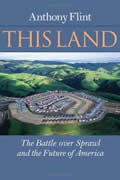
This Land: The Battle over Sprawl and the Future of America
By Anthony Flint
The Johns Hopkins University Press, 310 pages Buy this book
By Anthony Flint
The Johns Hopkins University Press, 310 pages Buy this book
The Irish Planning Institute
I was asked by a farmer in Carlow last week what it was the Irish Planning Institute does. Here's what the website says:
The Irish Planning Institute is the independent professional body representing the majority of professional planners engaged in physical and environmental planning in Ireland.
The Council of the Institute has a membership of 14 persons. Each member serves a term of 2 years and 7 members are up for election in May each year. A new President and Council take up office each June and the programme of events for the year runs from June to May.
The aims of the Planning Institute are:
- To raise the standards of planning.
- To articulate professional planning opinion.
- To improve and promote the status of the planning profession.
- To contribute to planning education.
- To encourage environmental awareness in the community.
- To represent Irish planning interests abroad.
Established in 1975, the Irish Planning Institute has four categories of membership: Corporate, Affiliate, Graduate and Student.
These members are employed in Ireland and abroad in central government, local authorities, state-sponsored bodies, institutes of higher education and as planning consultants.
There are a number of special interest groups within the Institute; the Cork Branch, the Rural Forum and the Private Practice Branch.
The Irish Planning Institute works in close association with University College Dublin and Queens University Belfast and accredits planning courses in both Colleges. It also presents thesis awards to the final year students in both Colleges. It is one of the nominated bodies under the European Commission Directive on Mutual Recognition of Professional Qualifications and will thus act as a regulatory agency for planning practice in Ireland.
The Institute is a nominating body to Seanad Eireann and to An Bord Pleanála.
The Institute publishes "Pleanáil" annually. This is the only technical publication on planning theory and practice published in Ireland. It also circulates a quarterly "Newsletter" to its members.
The Irish Planning Institute lobbies central Government on new legislation and on planning policy at national, regional and local levels. It also from time to time issues statements on current topics of public interest and debate.
Through its annual National Planning Conference the Institute offers a major forum for the debate of planning and related topics. It also organises a series of public lectures throughout the year to promote awareness of and participation in the planning process.
Two major annual awards are presented by the Institute. One is the "Infill Award" for the quality of design and planning content of new developments in established built up areas. The second is for "Planning Achievement." These awards are aimed at raising the standard of townscape design and planning awareness.
The Irish Planning Institute is an active member of the European Council of Town Planners and has held the Presidency of this organisation. Through this involvement the Institute not only represents Irish planning interests abroad but also forges important links with sister institutions in the E.C. and further afield.
The Irish Planning Institute offers an opportunity for informal contact between its own members and with members of other institutions and professional bodies through social functions, study tours and field trips in Ireland and abroad.
Chaos at the Crossroads
Read this up to Xmas. Here's a review:
Despite the rhetoric of some politicians, most of the Celtic Tiger prosperity derived from external factors such as a sustained US boom, advantageous exchange rates, low energy prices and EU transfers. However, a select group of politicians and public servants, including Alan Dukes with his Tallaght Strategy, the IDA, and those who championed a low-tax environment, deserve credit for creating the conditions under which we could take advantage of those factors. Reading Frank McDonald's books and Irish Times articles, one might believe that such principled public servants are the exception. McDonald has been compared to the American political commentator and documentary director Michael Moore. Moore wages a dramatic crusade against alleged corruption in the Republican Party. Meanwhile, McDonald has vociferously highlighted the flaws in Irish policy regarding planning, development and the environment. Like Moore, some see him as extreme. However, he has provided a necessary counterbalance to the development lobby and, most importantly, he has made us think about what we are doing to our environment.
In writing Chaos at the Crossroads, McDonald is joined by James Nix, who provides ballast in terms of the scope of the book. Together they take the cause to a new level with a 400-page blistering attack on what they describe as the "sloppy thinking, political chicanery, bureaucratic incompetence and pandering to vested interests" that comprises the Irish approach to planning and development. The purpose is a call to arms for outraged readers.
The book opens by accusing the Government of misinterpreting sustainable development as "development that has to be sustained". Certainly there is some justification in this criticism as there appears to be an unhealthy obsession with sustaining high rates of economic growth as measured by overall productivity rather than focusing on productivity per person and maintaining full employment. Ultimately, economic growth is only desirable if it enhances well-being. It is not an end in itself. The central thesis of the authors is that irresponsible planning and development decision-making has resulted in economic growth producing unnecessary negative consequences for quality of life. They endeavour to show this by examining urban sprawl, the proliferation of rural (particularly urban-generated) housing, poor performance in reducing greenhouse gases and bungled transport plans.
Through a series of anecdotes about dodgy decisions combined with plenty of illustrative photographs, McDonald and Nix capture much of the drama surrounding the heated debate that has been a feature of planning and development in recent years. The authors' "bad guys" include Martin Cullen (their "Minister for No Environment"), Bertie Ahern (photographed taking donations in the tent at the Galway races), Charlie McCreevy (and his daft decentralisation policy), the Irish Rural Dwellers' Association, and a selection of councillors. Their "good guys" include Ian Lumley, Michael Smith, An Taisce, Ed Walsh, the Greens and a selection of notables lamenting the destruction of the Irish landscape including Andrew Lloyd Webber, Jeremy Irons, Roy Foster and Neil Jordan. Throw in the odd damsel in distress who, due to mismanaged planning by the "bad guys", has to get up at 5am in Portlaoise to drive to Dublin to work, dropping off the kids on the way, and you have an entertaining, albeit depressing, planning drama.
The authors quite rightly focus on policies being based on little or no evidence. "Back of the envelope" opportunist policy-making is illustrated by a critique of Charlie McCreevy's decentralisation plan and by the flimsy detail in "Transport 21". Pandering to vested interests is demonstrated by, among other examples, the plan for the expansion of Dublin airport which puts the interests of the unions ahead of those of the travelling public.
The book concentrates on demonstrating the negative effects of poor decision-making and parish-pump politics caused by multi-seat constituencies which lead to national politicians being obsessed with local issues when they should actually be governing in the best interests of the nation. In addition to the "chaos" predicted by McDonald and Nix, this will ultimately damage the national economy.
The tendency to see environment and economy as being in competition rather than mutually reinforcing also remains a problem as exemplified by the Government's mistaken view that a carbon tax must hurt competitiveness. The decision to shelve such a tax draws just criticism from the authors.
The opponents of McDonald and Nix will complain the book is excessively negative - explicit solutions are contained in the last 35 pages of the 400-page volume. The authors are quick to highlight negative planning decisions but give less emphasis to where the system has been shown to work, through appeals to An Bord Pleanála, for example. It would also be interesting to read their views on areas of dispute within environmentalism such as intensifying housing in wealthy suburbs and differing opinions on incineration.
Nevertheless, this catalogue of poor, and in several cases highly suspect, decision-making will be of interest to both friends and foes of the authors. If you are the former, the book will provide plenty of material to back up your opinions and make you more passionate about the cause. For the latter, the book presents a series of propositions, opinions and some evidence that will be infuriating but hard to refute.
Given the importance of good planning for our future wellbeing, this book is required reading for all.
Planning permissions granted for new Irish homes fell 15% in Q3 2006
Planning permissions granted for new Irish homes fell 15% in Q3 2006

Source: CSO
Figures from the Central Statistics Office show that the number of planning permissions granted for new homes dropped in the third quarter of this year.
In the third quarter of 2006, planning permissions were granted for 20,883 dwelling units, compared with 23,981 units for the same period in 2005, a decrease of 12.9%.
The third quarter figures also show that:
- Planning permissions were granted for 15,486 new houses. This compares with 18,190 new houses in the same quarter of 2005, a decrease of 14.9%.
- Planning permissions were granted for 5,397 apartments in the third quarter of 2006 and 5,791 in the third quarter of 2005. This is a decrease of 6.8%.
- One-off houses accounted for 24.3% of all new dwelling units granted planning permission in this quarter.
- Total floor area planned was 5,337 thousand sq. metres in the third quarter of 2006. Of this, 55.9% was for new dwellings, 33.0% for other new constructions and 11.1% for extensions. The total floor area planned increased by 5.1% in comparison with the same quarter of 2005.
- Planning Permissions for new buildings for Agriculture increased to 1,453 this quarter. This compares to 470 permissions in the same quarter of 2005.
Friday, 22 December 2006
The perils of planning - sprawl?
For people who think Irish sprawl is bad. Have a read of this review of a book on the history of sprawl:
http://www.cato.org/pubs/regulation/regv29n1/v29n1-inreview.pdf
http://www.cato.org/pubs/regulation/regv29n1/v29n1-inreview.pdf
Creating Child Friendly Cities
I once spent a year in researching in Australia where Brendan Gleeson was based. His new book makes for interesting reading for any planner with or without kids:

Edited by: Brendan Gleeson & Neil Sipe
Edited by: Brendan Gleeson & Neil Sipe
Leading planning and geography authors present this comprehensive assessment of the extent to which the physical and social make-up of western cities accommodates and nourishes the needs of children and youth.
Examining the areas of planning, design, social policy, transport and housing, Creating Child Friendly Cities outlines strengths and deficiencies in the processes that govern urban development and change from the perspective of children and youth. Issues explored include children's view of the city and why this is unique; the 'obesity epidemic': is it caused by cities?; and the journey to school and children's transport needs generally.
With illustrations and case studies, Creating Child Friendly Cities presents planning professionals with a solid case for child-friendly cities and an action plan to create places for children to play.
Small Cities - Worth a read

Editor: David Bell Editor: Mark Jayne
This book is worth a read. Here's a quick review:
Until now, much research in the field of urban planning and change has focused on the economic, political, social, cultural and spatial transformations of global cities and larger metropolitan areas – in this topical new volume, David Bell and Mark Jayne redress this balance, focusing on urban change within small cities around the world. Places such as Dundee, Weimar, Cheltenham and Port Louis, Mauritius get their day in the sun.
Drawing together research from a strong international team of contributors, this four part book is the first systematic overview of small cities. A comprehensive and integrated primer with coverage of all key topics, it takes a multi-disciplinary approach to an important contemporary urban phenomenon. The book addresses political and economic decision making, urban economic development and competitive advantage, cultural infrastructure and planning in the regeneration of small cities, identities, lifestyles and ways in which different groups interact in small cities.
Centring on urban change as opposed to pure ethnographic description, the book’s focus on informed empirical research raises many important issues. Its blend of conceptual chapters and theoretically directed case studies provides an excellent resource for concerned students and professionals.
Environmental damage highlighted by Google Earth
 Irish planners are starting to use Google Earth more and more for development control and forward planning work. But its uses are clearly wider.
Rampant forest destruction, retreating glaciers and explosive urban growth have been highlighted by a partnership between the United Nations and internet search giant Google.
Under the scheme, announced by the UN Environment Programme (UNEP) on Wednesday, before-and-after satellite images of 100 global environmental hotspots have been integrated into Google's popular mapping program, Google Earth.
"These satellite pictures are a wake-up call to all of us to look at the sometimes devastating changes we are wreaking on our planet," UNEP chief Achim Steiner said in a statement.
Spectacular imagery
He described the selection photographs as "spectacular imagery" that offered a compelling "new way of visualising the dangers facing our planet today", and said it would lead to greater awareness and concern about ecological damage.
"By tapping into the global Google community, we are able to reach out to millions of people who can mobilise and make a difference," Steiner said.
Google Earth, which offers satellite images of the planet, has about 100 million users worldwide, who will now be able to use the program to access UNEP's "Atlas of Our Changing Environment".
Users can view the UNEP content by clicking on "Featured Content" in the program. This produces UNEP markers on each of the 100 hotspots and the before-and-after images are revealed by clicking on these markers.
Urban growth
Among the 100 "hotspots" included are the dwindling Amazon rainforest, melting polar ice caps, and the startling declines of Central Asia's Aral Sea and Africa's Lake Chad, shown in satellite images captured between 1963 and 2004. The rapid urbanisation of the US city of Las Vegas, between 1973 and 2000, and southern Chinese metropolis of Shenzen, between 1979 and 2004, is also shown.
Other crisis points highlighted include the rampant destruction of mangrove forests in Southeast Asia, notably in Thailand and Malaysia, and the effects of open-pit oil exploration in the Athabasca region of Canada's Alberta province.
The UNEP hotspots were added using Google's Keyhole Markup Language. Other information has been added to Google Earth by National Geographic, the Jane Goodall Institute, the US National Park Service, and Discovery Networks.
Virtual cityscapes show town planners the future
New Scientist carried this interesting article recently:


Virtual reconstructions of real cities are giving town planners and architects a clearer picture of the potential impact of future designs.
Virtual reconstructions of real cities are giving town planners and architects a clearer picture of the potential impact of future designs.
Computer scientists at the University of Arkansas in the US have developed a technique for rapidly constructing accurate 3D models of real cities using a unique combination of information. This includes satellite imagery, mapping data, building records and images captured from low-flying aircraft. Textures are also recorded using handheld digital cameras.
The researchers used the technique to build a 3D model of the city of Fayetteville in northwest Arkansas, which is experiencing rapid metropolitan growth. By adding models of planned building works to the 3D model, and then importing everything into the mapping program Google Earth, they are able to see exactly how these designs would impact on the landscape.
To construct their model of Fayetteville, the researchers used "oblique" aircraft imagery captured by a US company called Pictometry, and laser-based range-finding measurements taken from the ground.
Aircraft imagery
Malcolm Williamson, at the university's Centre for Advanced Spatial Technologies (CAST), who led the project, says the aircraft imagery was particularly useful for building the 3D maps quickly. Pictometry's Electronic Field Study software made it possible to automatically calculate the measurements of buildings from the aerial images.
"That really was a big key to building accurate models," he told New Scientist. "Measurements are theoretically possible through the use of high-density aerial LiDAR, but the Pictometry photography greatly increases the likelihood of being able to see and measure what is needed."
His team imported detailed architectural models of planned buildings to create a realistic representation of the future cityscapes. "We received CAD [Computer Aided Design] models from several different developers who have had new developments already approved," he says.
The Arkansas team's efforts are being tested by Sketchup, a company specialising in 3D modelling tools, which was acquired by Google in March 2006. Google now provides Sketchup as a free tool for users to build virtual structures, which can be imported into Google Earth. Williamson says free programs like these could eventually let ordinary citizens explore their city and contribute to planning schemes.
Information sharing
"It's an interesting application," says Michael Batty, an expert on mapping at University College London's Centre for Advanced Spatial Analysis (CASA) in the UK. "But it's one of many."
Batty's own group is building a 3D model of London using some of the same types of information. He says the ability to import models into Google Earth is particularly useful for sharing information.
Steve Coast, a UK mapping expert and founder of OpenStreetMap, a community-driven mapping project, says 3D modelling could be particularly useful for urban development. "Its cool stuff," he told New Scientist. "Lots of people are trying to make money out of it for city planning."
However, Coast questions whether the increased speed of modelling justifies cost of obtaining oblique imagery using aircraft. "Photographing the building from the air rather than the ground is a bit quicker but it's no breakthrough," he says.
Hauliers Welcome The Opening Of The Dublin Port Tunnel
Port Tunnel pushes up northside land prices
The northside is to benefit from the tunnel ...
The opening of the Dublin Port Tunnel (DPT) is already beginning to have an impact on industrial property values on the northside of Dublin. This increased level of activity in and around the tunnel entrance is likely to accelerate over the next twelve months and the benefits the tunnel will bring to the area will shift the focus of Dublin's industrial market from the west to the north of the city in the medium to long-term.
On opening, approx. 9,000 HGV's will be removed from the local road network in Dublin each day. Travel time from the Port Tunnel entrance at Santry to Dublin Port, which can take up to one hour on the N1, will be just seven minutes. There will be no toll charge applied to HGV's using the DPT, however, cars will pay a premium toll rate during peak hours, falling to a standard toll charge at off-peak times.
The reduced travel time to Dublin Port from the M50 will help the continued development and attractiveness of Dublin Port resulting in shorter, more reliable delivery times for business and industry. A reduction in travel times to and from the Port will help increase profitability and improve competitiveness for logistics, transport, manufacturing and distribution companies many of whom are operating in a low margins market.
A stringent enforcement strategy will have to be undertaken by Dublin City Council to ensure that the tunnel is effective in its objective. A decision has yet to be made in this regard but there are a number of options under consideration. These include:
- Time restrictions on access within the canal cordon
- Restrict HGV access within the canal cordon to permit holders only
- HGV tolling at the canal cordon
Regardless of which of the above enforcement strategies is applied, companies within close proximity of the tunnel entrance will have a competitive advantage over their competitors. They will have toll free access to the port whilst benefiting from the most time and fuel efficient means of accessing the port.
Companies going to or coming from the south or south-west of the City, will have to face toll charges, either at the West Link or the canal cordon. These charges and/or time restrictions will have an impact on operating costs and are likely to make some companies more competitive than others simply because of their location on the north side of Dublin.
With the Airport and recently opened M1 extension to Drogheda, the north side of the city already has much to offer occupiers in the industrial property market. However, the opening of the Port Tunnel next year will create a frenzy amongst occupiers as they battle it out for land and buildings which will give them access to the country's most important infrastructural project.
Areas already benefiting from the proposed new infrastructure include Santry and Clonshaugh, both of which are situated at the entrance to the Tunnel. At Clonshaugh Industrial Estate vacancy rates have plummeted over the last twelve months. One of the most recent transactions on the estate was the sale of the 30,000 sq. m. former Gateway 2000 facility for €16m towards the end of last year. This building had been vacant for almost three years at which time there was approx. 100,000 sq.m. of space available in Clonshaugh. This vacancy level stands at just 20,000 sq. m. today.
There are a number of older industrial estates within close proximity of the tunnel entrance which have potential for significant capital growth when it opens in 2006. Values on these older estates had been hardest hit when the industrial market weakened in 2002 & 2003. Many units have been available on these estates for a number of months and are now available at good value to purchasers. These estates include Dublin Industrial Estate, Airways Industrial Estate and Malahide Road Industrial Park, all of which are within minutes of the entrance to the Port Tunnel. Values on these estates may accelerate when the tunnel opens and the benefits of these locations become evident.
A price of €3.3m was secured in January for a 1.33 hectare site on the old Airport Road opposite Airways Industrial Estate. The site which is located approx. 2kms from the tunnel entrance had been on the market for over three years. These transactions are evidence of the pent-up levels of demand from investors and owner occupiers for good quality land and buildings which provide easy access to the Dublin Port Tunnel.
An area set to benefit significantly from opening of the Port Tunnel is Balbriggan. With the M1 Motorway extension from Dublin Airport to Courtlough now completed, the Port will be just twenty minutes from the Balbriggan / M1 Junction. Balbriggan also enjoys a good road network via the M1 to Belfast and the improvement in access to Dublin Port may encourage more northern companies to develop smaller hub sites in Dublin. Land values in the area are currently in the region of €450,000 - €500,000 per acre and have obvious potential for significant growth over the next 2 to 3 years.
Two major business parks will be developed in Balbriggan during this period including Fingal Bay Business Park, a joint development between Howard Holdings and Fingal County Council. Already, an 80,000 sq.ft hi-bay warehouse has been completed for Bridgestone Tyres as has a 30,000 sq.ft office building for the Passport Office. Treasury Holdings has commenced development on the M1 Business Park, a new 80 acre development at the M1 / Balbriggan junction.
Balbriggan has the potential to become a prime industrial area over the coming years with significant road improvements under way in the immediate area coupled with easy access to the Port. At a time when many companies are adopting a "wait and see" approach to the industrial market, there is an opportunity now to capitalise on the current market with the potential for a significant uplift in values in the short to medium term.
Fingal County Council is expected to adopt its new development plan this summer. Significant landbanks are likely to be rezoned from agricultural/amenity uses to industrial, particularly between the Ballymun and M1 junctions on the northern side of the M50. This increase in the supply of industrial land is not just a result of the region's increased capacity to service more land since the completion of the Northern Fringe Sewer two years ago. It also points to the Council's aspirations for significant development and growth during the life of the new plan and the DPT will have a fundamental part to play in achieving these goals over the coming years.
Despite the higher than expected costs of providing the Tunnel and the ongoing political debate on increasing its height for super-cube trucks, the opening of the Dublin Port Tunnel in 2006 will exacerbate demand amongst owner occupiers and developers for industrial land and buildings across the north side of Dublin.
Wednesday, 20 December 2006
Roche Announces Award of Woodstown Research Project Contract
The Minister for the Environment, Heritage and Local Government, Mr. Dick Roche, T.D., today (20 December, 2006) announced that he recently awarded the contract for a supplementary research project at the site of the Woodstown national monument.
The contract has been awarded to Archaeological Consultancy Services (ACS) Ltd. following an open, competitive tender process conducted in accordance with both national and EU public procurement procedures. ACS Ltd. is the company which carried out the initial archaeological investigations which uncovered the national monument site in 2003.
Minister Roche said "This contract flows from my approval of the key Working Group recommendation contained in its interim report. The interim report recommended that a supplementary research and investigation project be undertaken to review all available information, including archaeological assessments and investigations, and to undertake targeted excavation to answer specific questions about the site. These additional archaeological works are being undertaken in order to further investigate the nature, precise extent and significance of the national monument".
The works will be subject to the consent of the Minister under the National Monument Acts 1930 – 2004.
The site of the national monument, at which very substantial Viking elements have been uncovered, first came to light in 2003 during archaeological investigations in advance of the construction of the N25 Waterford City By-Pass. Some 5,000, mainly Viking related, artefacts and the grave of a Viking warrior have been discovered.
Given the major significance of the discovery, the Minister issued directions in May 2005 under the National Monuments (Amendment) Act 2004 requiring that the site be secured and protected pending the development of a long-term strategy for its preservation and management. To this end he is being advised by a Working Group comprising:
Dept. of the Environment, Heritage & Local Govt.:
Mr. John McDermott (Working Group Chairperson), Mr. Brian Duffy (Chief Archaeologist), Dr. Ann Lynch (Senior Archaeologist) & Mr. Gerry Smith (Working Group Secretary);
National Museum of Ireland:
Dr. Patrick Wallace (Director) & Ms. Nessa O'Connor (Assistant Keeper of Antiquities);
Heritage Council:
Mr. Ian Doyle (Archaeologist);
National Roads Authority:
Ms. Dáire O'Rourke (Archaeologist);
Waterford City Council:
Mr. Eamonn McEneaney;
Archaeologist:
Mr. Maurice Hurley
A copy of the Working Group's Interim Report is available on the Department of the Environment, Heritage and Local Government website www.environ.ie. Roche Announces Award of Woodstown Research Project Contract
RECYCLING CONSULTATIVE FORUM 11th – 12th JANUARY 2007
The Minister for the Environment, Heritage and Local Government, Mr Dick Roche, T.D., and Mr Danny McCoy, Director of Policy, IBEC, today (19th December 2006) announced details of the inaugural Recycling Consultative Forum which will take place in Dublin Castle on Thursday 11th and Friday 12th January 2007.
The Minister said the Forum will facilitate a high-level debate on the future direction of recycling in Ireland, assist in identifying any barriers to further progress in this area and advance suggestions on how these might be overcome. "There has been a radical transformation in recycling in Ireland in recent years and every sector of Irish society and the Irish economy has been involved. This Forum gives the opportunity to look to the future and to find new and better ways to improve our recycling performance. Given the partnership approach that has underpinned our progress in waste performance in recent years, I an delighted that IBEC are co-sponsoring the event with my Department."
Mr. McCoy added "the management of waste in an environmentally effective and cost efficient manner is one of the most challenging issues faced by Ireland today. IBEC have consistently viewed it as one of its key priorities and will continue to work positively and constructively with all stakeholders to deliver the integrated waste management infrastructure needed for a modern, vibrant and growing economy. It can be expected that the inaugural Recycling Consultative Forum will be a cornerstone in the development of future policy with regard to recycling in Ireland. The outcomes of the Forum's debates and discussions will certainly inform all stakeholders as to the direction of Irish waste management policy and practice."
"We have lined up an impressive team of national and international speakers to lead the debate, which will centre around the new EU Thematic Strategy on the Prevention and Recycling of Waste and the associated review of the EU Waste Framework Directive", said Minister Roche. "The list of speakers includes senior officials from the EU Commission and various national and international experts from industry", the Minister said.
Minister Roche said that Ireland's recycling rates were accelerating and we now need to focus on maintaining and building on this momentum. "I want the Forum to provide a platform for a high level debate on the various issues affecting recycling Ireland and how international expertise and best practice can help us move further up the league of EU States in terms of recycling performance. I cannot think of a better opportunity for key managers in industry and in the pubic service and for NGOs to learn more about how to identify further opportunities to up our performance. We need this type of interaction if we are going to be able to craft strategies and policies to meet the challenges going forward."
"This inaugural Recycling Consultative Forum marks a further stage in the ongoing and successful partnership between Government and industry and I want to again acknowledge the support of IBEC for the event," the Minister concluded.
Tuesday, 19 December 2006
The train now arriving is first for 100 years
THE first train has arrived at Dublin's newest railway station. The 'test train' arrived at the Docklands station yesterday to test track gauge and platform clearance, but in just three months, the station will be officially opened.
The first city centre station built in over 100 years and at a cost of €26m, Iarnrod Eireann said it will be fully operational by March 12, three months ahead of schedule. It will deliver a "dramatic increase" in peak frequency from
west Dublin suburbs such as Clonsilla and Castleknock, as well as developing areas such as Ashtown and the proposed Phoenix Park Station.
Most of the main building work is already completed. Signalling and final fit-out will begin in the New Year.
It will handle 2,500 commuters daily on opening, with potential to cater for up to 10,000 more.
The first city centre station built in over 100 years and at a cost of €26m, Iarnrod Eireann said it will be fully operational by March 12, three months ahead of schedule. It will deliver a "dramatic increase" in peak frequency from
west Dublin suburbs such as Clonsilla and Castleknock, as well as developing areas such as Ashtown and the proposed Phoenix Park Station.
Most of the main building work is already completed. Signalling and final fit-out will begin in the New Year.
It will handle 2,500 commuters daily on opening, with potential to cater for up to 10,000 more.
Council moves to protect green spaces
Irish Times:
A south Dublin local authority has moved to protect its parks following a series of planning applications which included development on local green spaces.
Under a variation to the council's development plan, developers in the Dún Laoghaire/Rathdown area will no longer be able to include green areas in new
planning applications if they have been the subject of a deed of dedication to the council or were designated as open spaces on a previous application.
The move comes after open spaces in Dún Laoghaire, Stillorgan, Dalkey and Foxrock were included in residential planning applications. Some of the greens had been the subject of deeds of dedication to the council by developers but were not followed through.
Open spaces under threat included a green at Sefton Estate in Dún Laoghaire, which was initially included in a planning application for Dun Laoghaire golf course by Cosgrave Brothers, and a green at Stillorgan Heath, part of an application for development by Shannon Homes, which was subsequently withdrawn.
Councillors voted to vary the Dún Laoghaire/Rathdown County Council Development Plan to include the statement "no residential developments may take place in open green spaces that are the subject of a deed of dedication or identified in a planning application as open space".
The variation will go to public consultation early in the new year before going back to councillors for final approval.
The cathaoirleach, Cllr Eugene Reagan (FG), who tabled the variation, welcomed the decision by councillors to accept it.
"With greater density in housing and more apartments it is vital that our green spaces are protected to maintain the quality of life.
"The variation now approved by council will address fully the concerns of residents in such estates as Sefton in Dún Laoghaire, Mapas in Dalkey and Rocwood and Torquay Wood in Foxrock, who are understandably concerned about planning applications affecting their green spaces."
Mr Reagan said the variation would give clarity and legal certainty on the preservation of green spaces.
A south Dublin local authority has moved to protect its parks following a series of planning applications which included development on local green spaces.
Under a variation to the council's development plan, developers in the Dún Laoghaire/Rathdown area will no longer be able to include green areas in new
planning applications if they have been the subject of a deed of dedication to the council or were designated as open spaces on a previous application.
The move comes after open spaces in Dún Laoghaire, Stillorgan, Dalkey and Foxrock were included in residential planning applications. Some of the greens had been the subject of deeds of dedication to the council by developers but were not followed through.
Open spaces under threat included a green at Sefton Estate in Dún Laoghaire, which was initially included in a planning application for Dun Laoghaire golf course by Cosgrave Brothers, and a green at Stillorgan Heath, part of an application for development by Shannon Homes, which was subsequently withdrawn.
Councillors voted to vary the Dún Laoghaire/Rathdown County Council Development Plan to include the statement "no residential developments may take place in open green spaces that are the subject of a deed of dedication or identified in a planning application as open space".
The variation will go to public consultation early in the new year before going back to councillors for final approval.
The cathaoirleach, Cllr Eugene Reagan (FG), who tabled the variation, welcomed the decision by councillors to accept it.
"With greater density in housing and more apartments it is vital that our green spaces are protected to maintain the quality of life.
"The variation now approved by council will address fully the concerns of residents in such estates as Sefton in Dún Laoghaire, Mapas in Dalkey and Rocwood and Torquay Wood in Foxrock, who are understandably concerned about planning applications affecting their green spaces."
Mr Reagan said the variation would give clarity and legal certainty on the preservation of green spaces.
Subscribe to:
Posts (Atom)